
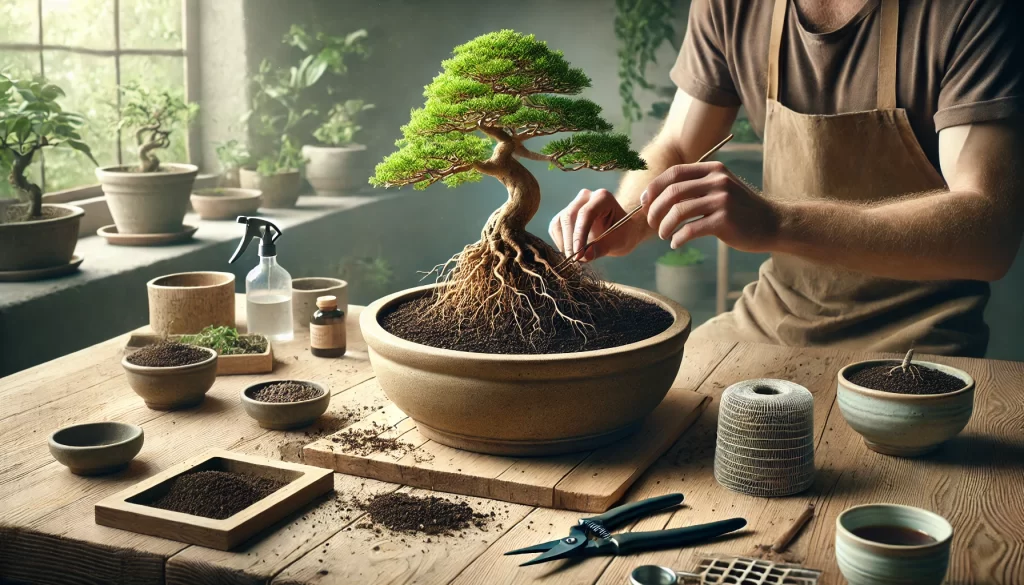
Repotting is one of the most important steps in the life of a bonsai. When done correctly, it renews the soil, promotes healthy root growth, and keeps your tree thriving. But many beginners fear this process—especially harming the roots. Knowing how to repot a bonsai tree without damaging its roots is essential for long-term success and balance in both health and form.
In this complete guide, you’ll learn when, why, and how to repot your bonsai, with careful attention to protecting the delicate root system that supports it.
🌱 Why Bonsai Trees Need Repotting
Unlike regular potted plants, bonsai trees live in shallow containers with limited soil. Over time, the roots fill up the space and become root-bound, preventing water absorption and oxygen exchange.
✅ Repotting ensures:
- Fresh, oxygen-rich soil
- Healthy, compact root structure
- Better drainage and nutrient uptake
- Space for new growth
- Prevention of root rot and disease
📌 Repotting doesn’t mean a bigger pot—it means new life in the same space.
📅 When to Repot Your Bonsai Tree
Timing is crucial. Repotting at the wrong moment can stress or even kill the tree.
🕓 Best Time: Late Winter to Early Spring
This is when the tree is coming out of dormancy and preparing to grow. The sap is rising, but the tree hasn’t fully activated, making it less vulnerable to root disturbance.
📌 General Repotting Frequency:
- Young trees (fast-growing): Every 1–2 years
- Mature bonsai: Every 3–5 years
- Slow growers (e.g., pines): Up to every 6 years
⚠️ Signs your bonsai needs repotting:
- Water runs off the surface quickly
- Roots circling the bottom of the pot
- Soil looks compacted or doesn’t dry evenly
- Tree growth has slowed significantly
🧰 What You’ll Need (Tools & Materials)
To repot a bonsai safely, prepare these items:
- ✅ Root rake or chopstick (to untangle roots)
- ✅ Bonsai scissors or root shears
- ✅ Wire cutters
- ✅ New or cleaned bonsai pot
- ✅ Drainage mesh
- ✅ Fresh bonsai soil mix
- ✅ Water spray bottle
- ✅ Optional: Root hormone powder or mycorrhizal fungi
Having all tools ready helps minimize stress on the tree.
🪴 How to Repot a Bonsai Tree Step by Step
Let’s walk through how to repot a bonsai tree without damaging its roots, from removal to recovery.
1️⃣ Prepare the New Pot
- Clean the pot thoroughly
- Attach drainage mesh over the holes
- Secure anchoring wires (if used for stability)
2️⃣ Gently Remove the Tree
- Turn the pot upside down and gently tap the sides
- Use a root rake or chopstick to loosen soil
- Never pull the tree by the trunk—support the root base
3️⃣ Prune the Roots
- Remove 30–50% of the roots, focusing on long, circling ones
- Cut only the fine feeder roots near the edges
- Avoid cutting back to the trunk or central taproot too harshly
⚠️ Never remove more than half of the roots in one session.
4️⃣ Inspect for Root Rot or Pests
- Trim off any black, mushy, or dead roots
- Apply fungicide if rot is present
- Rinse roots with clean water if pests are visible
5️⃣ Add New Soil
- Place a base layer of fresh bonsai mix
- Position the tree, ensuring correct front and tilt
- Fill around roots evenly, using a chopstick to eliminate air pockets
6️⃣ Secure the Tree (Optional)
- Use wire to anchor the root ball if the tree is unstable
- Avoid tightening too hard—just enough to hold position
7️⃣ Water Thoroughly
- Soak the soil until water flows freely through drainage holes
- Spray the leaves lightly for humidity
🌿 Choosing the Right Bonsai Soil
Never reuse old soil. A good bonsai soil mix should be:
- Well-draining (prevents root rot)
- Airy (oxygen circulation)
- Nutrient-balanced (supports recovery)
Common soil components:
- Akadama (clay-like, great water retention)
- Pumice (lightweight and porous)
- Lava rock (adds structure and drainage)
- Pine bark (organic, holds nutrients)
✅ Adjust the mix based on your tree species and climate.

Critical Observator offers expert tips and guides to make indoor plant care easy, enjoyable, and accessible.