
Published on April 12, 2025
Author: Emily Parker
We often think of companion planting as something you do in a backyard vegetable patch. But what if we told you that you can apply the same concept indoors to boost your houseplants’ health, prevent pests naturally, and even enhance your décor?
Companion planting indoors is a brilliant yet underused technique that takes advantage of plant relationships, where certain species grow better when placed near each other. Whether it’s improving humidity, deterring pests, or simply creating a harmonious space, learning how to pair your houseplants can transform your indoor garden.
In this guide, we’ll explore the science and practice of indoor companion planting — from ideal plant pairings to practical layouts, and even how to avoid bad combinations. Let’s bring some natural synergy into your home.
Table of Contents
- What Is Companion Planting (and Why Indoors)?
- Benefits of Indoor Companion Planting
- Best Plant Combinations for Indoor Spaces
- Pairing by Function: Humidity, Light, and Growth Habits
- Companion Planting for Natural Pest Control
- Layout Tips for Shared Pots and Grouped Arrangements
- What to Avoid: Incompatible Indoor Plant Pairs
- Maintenance Tips for Mixed Plantings
- Final Thoughts
1. What Is Companion Planting (and Why Indoors)?
Companion planting is the practice of placing plants together so they can benefit each other. Traditionally used in outdoor gardening, it’s based on the idea that some plants complement others — by repelling pests, enhancing soil, or even improving flavor in edibles.
When brought indoors, this concept adapts beautifully. You don’t have soil microbiomes or insects in abundance indoors, but you do have microclimates — pockets of light, humidity, airflow, and space. By choosing houseplants that thrive side-by-side, you can create low-maintenance mini-ecosystems in your living room, kitchen, or office.
2. Benefits of Indoor Companion Planting
✅ Natural Pest Prevention
Some plants release subtle scents that repel common indoor pests like aphids, fungus gnats, or spider mites. Pairing these with vulnerable species creates a natural defense.
✅ Humidity Regulation
Plants that transpire heavily (like ferns or calatheas) can help increase ambient humidity for nearby plants that prefer moisture.
✅ Aesthetic Harmony
When well-chosen, companion plants add visual texture and contrast without crowding or clashing.
✅ Efficient Use of Space
Companion planting encourages vertical layering — combining tall, trailing, and ground-level plants in one container or corner.
✅ Shared Watering and Light Needs
Grouping plants with similar needs makes care easier and reduces the risk of over- or underwatering.
3. Best Plant Combinations for Indoor Spaces
Here are some of the most effective and beginner-friendly houseplant pairings:
🌿 Snake Plant (Sansevieria) + ZZ Plant (Zamioculcas zamiifolia)
Both are drought-tolerant, low-light champions. They thrive in the same soil and light conditions with minimal fuss.
🍃 Spider Plant + Pothos
These are excellent air-purifying plants. Pothos benefits from the spider plant’s transpiration and looks beautiful trailing around it.
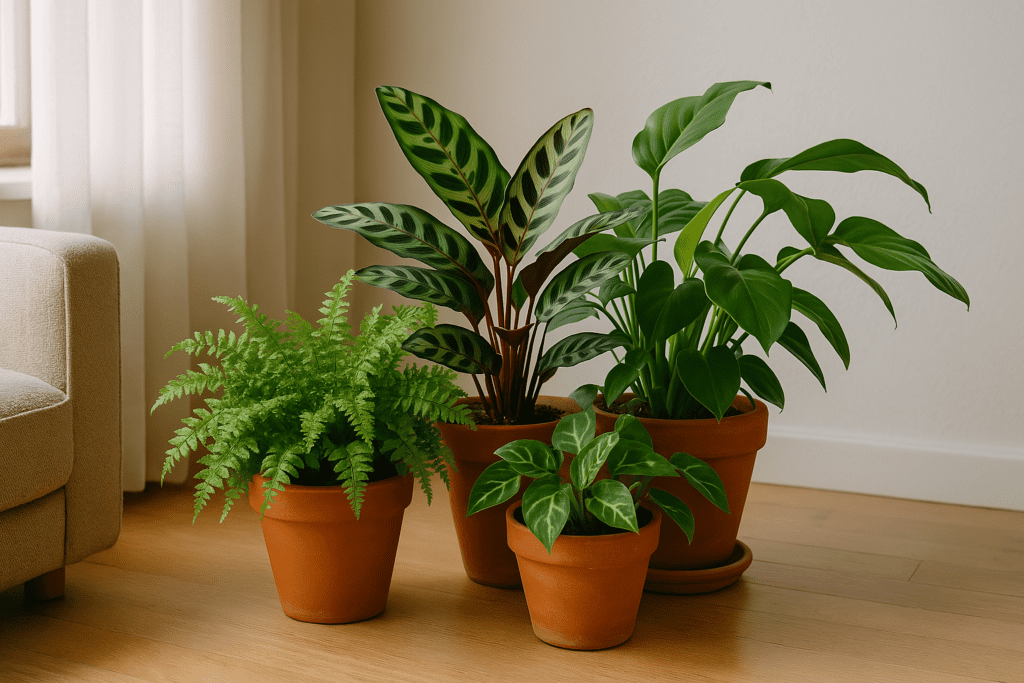
🌱 Ferns + Calatheas
Both crave humidity and filtered light. Together, they form a lush, tropical vibe — perfect for a bathroom or humid corner.
🌸 Peace Lily + Philodendron
Both like consistently moist soil and medium light. The peace lily’s upright blooms contrast nicely with the philodendron’s trailing vines.
🌿 Basil + Parsley + Chives (Indoor Herb Trio)
Perfect for a sunny kitchen windowsill. These herbs grow well together and even help deter common kitchen bugs like fruit flies.
4. Pairing by Function: Humidity, Light, and Growth Habits
🌬️ Humidity Companions
- High-humidity lovers: ferns, calatheas, marantas, baby tears
- Pair together in a cluster or terrarium to retain moisture
- Place a pebble tray underneath for even better humidity control
☀️ Light-Level Matches
- Low light: pothos, ZZ plant, cast iron plant
- Bright indirect: fiddle leaf fig, rubber plant, monstera
- Grouping similar light-lovers avoids stretching or burning
🪴 Growth Habit Combinations
- Tall + Trailing + Compact: Try monstera (tall), pothos (trailing), and fittonia (compact) in one container
- Avoid crowding roots — give each plant its own root space if sharing a pot
5. Companion Planting for Natural Pest Control
Some plants emit natural compounds that repel insects — a win-win when protecting your collection:
🪰 Pest-Repelling Plants
- Lavender: Repels moths, flies, and mosquitoes
- Mint: Deters ants and aphids
- Basil: Excellent against fruit flies
- Marigolds (indoors with good light): Deters whiteflies and spider mites
🧪 How to Use Them Indoors
- Place mint or basil near susceptible plants like orchids or African violets
- Crush a leaf occasionally to release more aroma
- Refresh or replace regularly — scent fades over time
6. Layout Tips for Shared Pots and Grouped Arrangements
✅ Shared Pot Tips
- Use a wide, shallow container to give each root system room
- Insert plant dividers or use smaller pots inside a larger one
- Choose plants with similar soil needs (i.e., well-draining vs moisture-retentive)
🧱 Grouping on Shelves
- Vary height using plant stands or stacked books
- Use trailing plants (e.g., philodendron) on high shelves for cascading effect
- Combine textures — fuzzy leaves, shiny leaves, patterned foliage
🌞 Microclimate Awareness
- Avoid putting thirsty plants next to cacti
- Don’t place humidity-loving combos in air-conditioned or drafty areas
- Rotate clusters weekly to ensure even growth
7. What to Avoid: Incompatible Indoor Plant Pairs
Not all plants make good neighbors. Watch out for combinations with conflicting needs or root competition.
🚫 Incompatible Examples
- Cactus + Fern: One loves dryness, the other demands humidity
- Aloe Vera + Peace Lily: Aloe needs dry soil; peace lily needs it consistently moist
- Succulents + Herbs: Succulents hate overwatering, while herbs thrive on regular moisture
🛑 Rule of thumb: If the plants have opposite care needs, keep them separate.
8. Maintenance Tips for Mixed Plantings
Even the best companions need attention. Here’s how to keep your groupings healthy:
- Inspect weekly for pest transmission between neighbors
- Water consistently — don’t flood one and starve the other
- Feed all plants with compatible fertilizers or water-soluble formulas
- Repot when needed — overcrowding leads to stress and root rot
- Prune regularly to maintain shape and airflow
9. Final Thoughts
Companion planting indoors isn’t just about saving space — it’s about creating balance. Plants, like people, often thrive in community. By learning how to pair your houseplants intentionally, you build a healthier, more beautiful, and more resilient home garden.
So instead of thinking of each plant as a solo act, think of your space as an ensemble — with color, texture, scent, and function working in harmony. Nature’s systems are complex for a reason, and now, you can bring that wisdom right into your living room.

Critical Observator offers expert tips and guides to make indoor plant care easy, enjoyable, and accessible.