
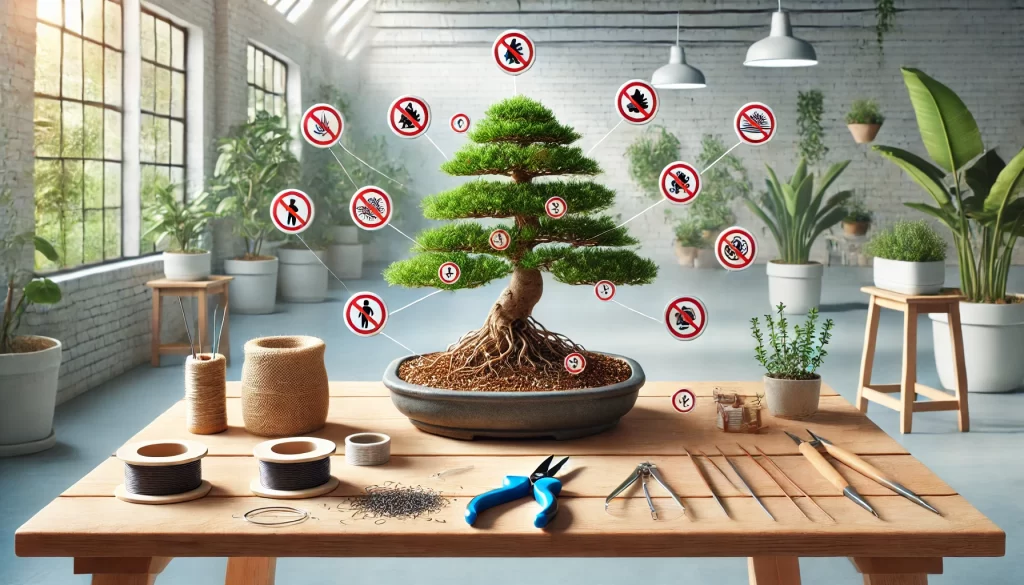
Bonsai cultivation is a beautiful fusion of horticulture and art, but it’s also a practice that requires patience, consistency, and attention to detail. For beginners and even experienced enthusiasts, small missteps can lead to long-term setbacks or even the loss of a cherished tree. Understanding the most common errors will help you grow stronger, healthier, and more visually balanced trees. This guide reveals the top 10 mistakes to avoid when growing bonsai trees, and how to steer clear of them with confidence.
📌 1. Overwatering or Underwatering
One of the most frequent causes of bonsai health issues is improper watering. Overwatering can suffocate the roots, while underwatering can cause severe dehydration and leaf drop.
How to avoid it:
Check the soil daily using your finger or a moisture meter. Only water when the top layer begins to dry. Always ensure your pot has proper drainage holes and never let your bonsai sit in stagnant water.
📌 2. Using the Wrong Soil Mix
Standard potting soil is often too dense for bonsai, leading to root rot or poor aeration. Bonsai trees need a soil mix that allows both drainage and oxygen flow.
How to avoid it:
Use bonsai-specific soil, often a mix of akadama, pumice, and lava rock. Customize the mix based on species and climate. Well-draining, nutrient-rich, and breathable soil is essential.
📌 3. Neglecting Pruning and Pinching
Letting a bonsai grow freely without pruning will eventually destroy its shape and balance. Uncontrolled growth can also lead to poor light distribution and weak inner branches.
How to avoid it:
Perform maintenance pruning during the growing season to maintain silhouette and structure. Pinch new shoots regularly and use structural pruning in spring to guide long-term shape.
📌 4. Pruning at the Wrong Time
Timing is everything in bonsai. Pruning too late in the season or during dormancy can weaken the tree or expose it to disease.
How to avoid it:
Know your tree’s seasonal cycle. Most pruning should be done in early spring or mid-summer. Avoid major cuts during winter dormancy or late fall, especially for sensitive species.
📌 5. Choosing the Wrong Tree for Your Climate
Not all bonsai trees thrive in all environments. Some species need dormancy periods, while others prefer tropical conditions.
How to avoid it:
Choose a species suited to your region and lifestyle. For example, Ficus and Jade do well indoors, while Junipers and Maples thrive outdoors. Always research before buying.
📌 6. Ignoring Root Pruning and Repotting
Over time, bonsai roots grow dense and compacted, limiting water and nutrient uptake. Without proper care, this leads to poor health and stunted growth.
How to avoid it:
Repot every 1–3 years based on tree age and species. During repotting, trim about one-third of the roots and refresh the soil. Always do this in early spring when the tree is ready to grow again.
📌 7. Wiring Incorrectly or Leaving Wire On Too Long
Wiring is essential for shaping, but if done improperly, it can scar or damage your tree permanently. Leaving wire on too long is a common mistake.
How to avoid it:
Use the correct wire thickness and apply it at a 45° angle. Check every few weeks for tightness. Remove the wire before it bites into the bark. Always wire during active growth phases for flexibility.
📌 8. Exposing Bonsai to Extreme Conditions
Too much sun, cold, wind, or indoor dryness can harm bonsai. Many trees are sensitive to environmental extremes, especially when freshly styled or repotted.
How to avoid it:
Understand the light, temperature, and humidity needs of your tree. Protect outdoor bonsai from frost and strong winds. Use humidity trays indoors and avoid placing bonsai near heaters or air conditioners.
📌 9. Using Decorative Pots Too Early
It’s tempting to place your bonsai in a beautiful ceramic pot right away, but doing this too early can hinder development. Training pots offer better support during the early stages of shaping.
How to avoid it:
Start with a training pot for stability and root development. Once the structure is set and the tree matures, transition to a display pot that complements its style.
📌 10. Expecting Quick Results
Bonsai is a long-term art form. Many beginners become discouraged when they don’t see dramatic progress quickly. But bonsai takes years—not weeks—to evolve.
How to avoid it:
Adjust your mindset. Observe changes season by season. Celebrate small improvements in structure, foliage, or ramification. Bonsai teaches patience, presence, and discipline.
❓ FAQs About Bonsai Mistakes
What’s the most common mistake for bonsai beginners?
Overwatering is the most frequent mistake. It’s easy to think more water equals more care, but bonsai roots need oxygen and can rot if constantly wet.
Can I fix a badly wired or over-pruned bonsai?
Yes, in most cases. Bonsai trees are resilient. Let the tree recover, reduce stress, and adjust your technique moving forward. Regrowth often occurs within a few months.
How do I know if I’ve repotted too early or too late?
If water runs off quickly or roots circle the pot, it’s time. Too early and the tree may not have filled the pot yet; too late and the roots become compacted. Repot in early spring for best results.
Why did my bonsai lose all its leaves suddenly?
Sudden leaf drop can indicate stress, shock from overwatering, under-watering, poor soil, or pests. Identify the issue quickly and create stable conditions for recovery.
Should I fertilize a newly bought bonsai?
Wait at least two weeks to let it acclimate to your environment. After that, fertilize lightly during the growing season and follow care guidelines specific to the species.

Critical Observator offers expert tips and guides to make indoor plant care easy, enjoyable, and accessible.