
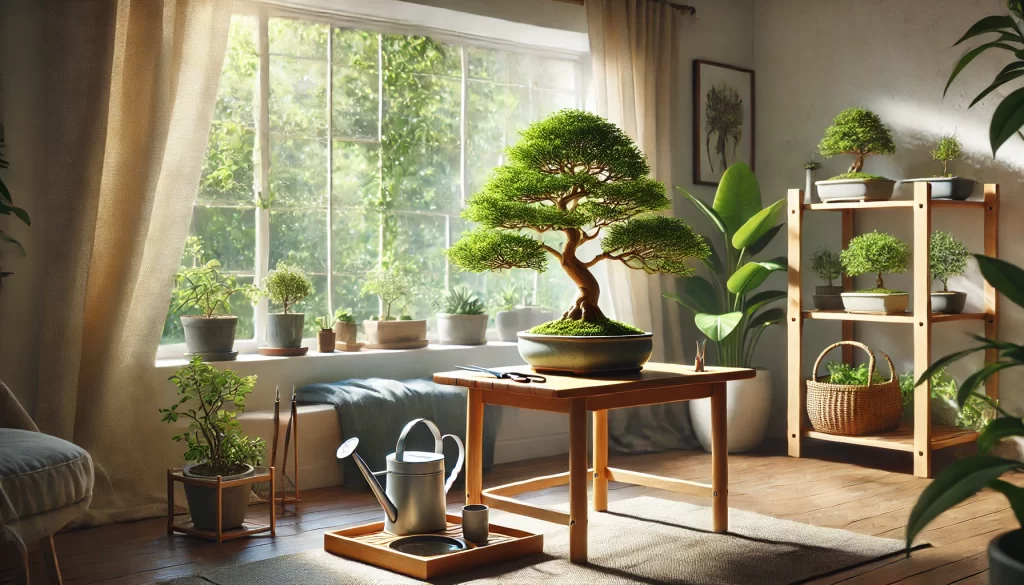
Indoor bonsai trees bring the beauty and tranquility of nature into your home. These miniature trees, carefully cultivated in small containers, require specific care to thrive indoors. While they may seem delicate or complex, understanding the basics of how to care for indoor bonsai trees will help you maintain a healthy and aesthetically pleasing plant all year round.
This guide covers lighting, watering, humidity, feeding, pruning, and common indoor conditions that affect bonsai health. With the right approach, you’ll create a peaceful, green companion that flourishes by your window.
🌿 Are Bonsai Trees Suitable for Indoors?
Not all bonsai species are meant to live inside. Many traditional species, such as pine or juniper, require full sun and outdoor conditions. However, certain trees adapt well to indoor life when provided with adequate light, humidity, and airflow.
Top indoor bonsai species:
- Ficus (Ficus retusa or Ficus benjamina)
- Chinese Elm (Ulmus parvifolia)
- Jade Tree (Crassula ovata)
- Schefflera (Umbrella Tree)
- Serissa (Serissa foetida)
These trees tolerate lower light levels, indoor temperatures, and reduced airflow better than others.
💡 Lighting: The Most Critical Indoor Factor
Light is the number one challenge for indoor bonsai care. Trees need sunlight to photosynthesize, grow, and maintain strong leaves and branches. Without it, they weaken and drop foliage.
✅ How to provide proper lighting:
- Place your bonsai near a south-facing window for maximum natural light
- Rotate the tree weekly to ensure even exposure
- If natural light is limited, use grow lights (LED or fluorescent) for 12–16 hours per day
- Avoid dark corners, shaded shelves, or window sills blocked by curtains
Monitor leaf color and growth. Pale leaves or leggy stems are signs of inadequate light.
💧 Watering Indoor Bonsai
Watering indoor bonsai is more nuanced than just sticking to a schedule. It depends on light, temperature, pot size, and tree species.
✅ Watering best practices:
- Check soil moisture daily using your finger or a wooden skewer
- Water thoroughly when the top inch of soil is dry
- Use a fine-nozzle watering can to avoid displacing soil
- Let excess water drain completely—never let the pot sit in water
- Avoid overwatering in winter when growth slows
Consistent, mindful watering helps prevent root rot and dehydration.
💨 Humidity and Air Circulation
Indoor environments, especially those with air conditioning or heating, tend to be dry. This can stress your bonsai, especially tropical species that need higher humidity.
✅ How to improve humidity:
- Use a humidity tray filled with water and small stones under the pot
- Mist the leaves occasionally (except for hairy-leaved species)
- Group bonsai with other plants to create a microclimate
- Keep your bonsai away from vents, radiators, and fans
Good airflow also helps prevent mold, mildew, and pests.
🌡️ Temperature Requirements
Most indoor bonsai trees prefer stable, moderate temperatures. Avoid temperature extremes or sudden fluctuations.
- Ideal indoor range: 60–75°F (15–24°C)
- Avoid placing bonsai near drafty windows in winter
- Tropical species prefer warmer conditions and may drop leaves if too cold
Ficus and Jade, for example, are more tolerant of variable temperatures, while Serissa is more sensitive.
🧪 Fertilizing Indoor Bonsai
Indoor bonsai need regular feeding to replenish nutrients that are quickly used up in small pots.
✅ Fertilizer tips:
- Use a balanced liquid fertilizer (10-10-10 or 20-20-20) diluted to half strength
- Feed every 2–4 weeks during spring and summer
- Reduce or stop fertilizing during fall and winter dormancy
- Avoid fertilizing newly repotted or stressed trees
Too much fertilizer can burn roots. Less is more—especially for indoor trees.
✂️ Pruning and Shaping
Pruning keeps your bonsai compact, in proportion, and aesthetically pleasing. Indoor trees grow year-round in controlled environments, so you’ll need to monitor for new shoots often.
✅ Pruning guidelines:
- Maintenance pruning: Remove unwanted growth to keep the tree’s shape
- Structural pruning: Done in spring to refine branch placement
- Use sharp, sterile bonsai scissors
- Avoid cutting more than 30% of foliage at once
Prune gently and regularly to encourage healthy growth and ramification.
🪴 Repotting Indoor Bonsai
Even indoor bonsai need periodic repotting to prevent root binding and refresh soil nutrients.
- Repot every 2–3 years, depending on species and age
- Best done in early spring before new growth begins
- Trim 20–30% of roots and place in fresh bonsai soil
- Avoid fertilizing for 4 weeks after repotting
Signs that it’s time to repot include poor drainage, slowed growth, or roots circling the bottom.
🐛 Indoor Pests and Problems
Indoor bonsai are less exposed to pests, but problems still arise due to dry air or poor ventilation.
Common pests:
- Spider mites
- Scale insects
- Aphids
- Fungus gnats
How to prevent and treat:
- Inspect your tree weekly
- Use neem oil or insecticidal soap as needed
- Improve humidity and airflow
- Avoid overwatering, which attracts pests
Catch issues early to keep your bonsai healthy and strong.
🧘 The Joy of Indoor Bonsai
Caring for an indoor bonsai tree is more than a hobby—it’s a lifestyle. These trees invite you to slow down, pay attention, and engage with nature even in the heart of the city.
They become companions, reflections of your energy and effort. Whether you’re working from home or simply want a peaceful presence by your window, indoor bonsai offer beauty, calm, and an ever-changing connection to life.
❓ FAQs About Indoor Bonsai Tree Care
Do bonsai trees do well indoors?
Yes, but only specific species. Ficus, Chinese Elm, and Jade are among the best indoor options. They tolerate less light and dry air better than outdoor species.
How often should I water my indoor bonsai?
Water when the top inch of soil feels dry. This can range from every few days to once a week, depending on your home environment.
Can I keep my bonsai in a bathroom for humidity?
Yes, if it gets enough light. Bathrooms offer higher humidity, but poor light can offset the benefits.
What’s the best window for indoor bonsai?
A south-facing window is ideal. If unavailable, supplement with grow lights for 12–16 hours daily.
Is misting enough for bonsai humidity?
No, misting helps but isn’t a replacement for good air circulation and a humidity tray.

Critical Observator offers expert tips and guides to make indoor plant care easy, enjoyable, and accessible.