
Author: Emily Parker
Succulents are the perfect gateway into plant parenthood — especially for anyone juggling a busy schedule. These hardy, slow-growing, and visually stunning plants thrive on minimal attention and make indoor gardening refreshingly low-maintenance 🌵✨
In this complete guide, you’ll learn how to care for succulents without stress, whether you’re managing meetings, commuting daily, or just want a houseplant that won’t judge your forgetfulness.
Why Succulents Are Perfect for Busy People
Succulents offer a rare combination of beauty + resilience. Here’s what makes them ideal:
- ✅ Store water in their leaves/stems = drought-tolerant
- ✅ Require minimal watering
- ✅ Thrive in dry indoor air
- ✅ Adapt to various lighting conditions
- ✅ Come in hundreds of shapes, sizes, and colors
- ✅ Great for desktops, windowsills, and small apartments
And most important: they forgive neglect better than any other plant family.
Choosing the Right Succulents for Indoors
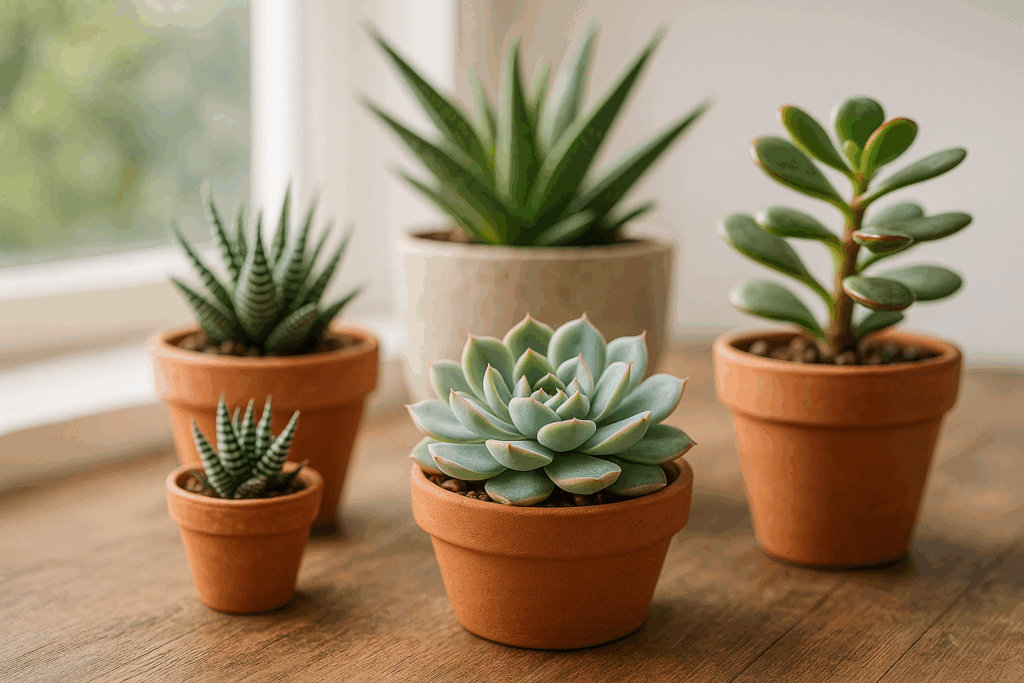
Some succulents handle indoor life better than others. Here’s a short list of low-maintenance champions:
| Plant Name | Light Needs | Watering | Extra Notes |
|---|---|---|---|
| Jade Plant | Bright indirect | Every 2–3 weeks | Slow grower, symbolic of luck |
| Zebra Haworthia | Moderate light | Every 2–3 weeks | Compact, stripey leaves |
| Echeveria | Bright direct | Every 10–14 days | Classic rosette shape |
| Snake Plant | Low to bright | Every 3–4 weeks | Technically a succulent! |
| Aloe Vera | Bright light | Every 2–3 weeks | Medicinal and easy to grow |
🪴 Pro tip: Avoid succulents labeled “for outdoor use only” — many won’t adapt well to indoor light levels.
The Golden Rule of Succulent Watering
Less is more. The quickest way to kill a succulent? Overwatering. Their roots are prone to rot in soggy soil.
Signs you’ve overwatered:
- Leaves turning translucent or mushy
- Base of the plant looks black
- Soil never seems to dry out
Watering tips:
- Wait until the soil is bone dry before watering
- Water deeply, then let it drain fully
- Never let the pot sit in water
- In winter, cut watering in half (they go semi-dormant)
⏱ A good rhythm for most succulents: every 2–3 weeks
Potting Like a Pro: Containers Matter
Choosing the right pot is half the battle:
- ✅ Must have a drainage hole
- ✅ Terracotta is ideal (it breathes!)
- ❌ Avoid glass terrariums with no drainage
- ✅ Keep pots only 1–2 inches wider than the plant
Succulents like tight, shallow spaces — too much soil = too much moisture retention.
Soil Mix That Mimics Their Natural Habitat
Succulents are native to arid, sandy environments. Your regular potting soil? Too heavy.
DIY succulent soil:
- 2 parts cactus potting mix
- 1 part coarse sand or perlite
- Optional: small lava rocks or orchid bark for aeration
🏜 This blend allows fast drainage, mimicking their natural habitat.
Finding the Perfect Light Spot
Succulents love sunlight — but not all can handle direct rays all day.
Best indoor locations:
- South- or west-facing windows (4–6 hrs of light)
- East-facing windows for soft morning sun
- Use LED grow lights if natural light is low
📍 Warning: Too little light = stretched, leggy succulents (called “etiolation”)
🌞 Rotate your pot every few days to encourage balanced growth.
Fertilizing Without Fuss
Succulents don’t need much feeding — but a little boost during the growing season helps.
- Use diluted liquid fertilizer (¼ strength)
- Apply once a month in spring/summer
- Avoid fertilizing in fall/winter
🌱 Choose a cactus/succulent-specific formula with low nitrogen.
Pest Prevention for the Busy Plant Parent
Succulents are low-risk, but pests can still creep in:
Common threats:
- 🐛 Mealybugs (cotton-like clusters)
- 🦟 Fungus gnats (from moist soil)
- 🐜 Aphids (especially near flowering succulents)
Quick fixes:
- Spray neem oil weekly
- Let soil dry completely
- Remove pests with a Q-tip + rubbing alcohol
🚫 Don’t overreact — most infestations are mild and manageable with consistency.
Succulent Styling for Small Spaces
Succulents shine in creative displays. Try these stress-free decor ideas:
- 📚 Line up mini pots on a floating shelf
- 🪟 Cluster 3–5 varieties near a sunny window
- 🪴 Use geometric hanging planters for trailing types
- 🧺 Create a centerpiece with different shapes & heights
- ☕ Repurpose mugs, tins, or bowls (with drainage!)
Minimal care + maximal style = perfect for busy lifestyles.
What to Expect: Growth Rate and Patience
Succulents are slow growers. Don’t panic if you don’t see weekly changes.
- Most grow noticeably during spring/summer
- Some (like Haworthia or Jade) grow only a few inches per year
- Avoid repotting too soon — once every 2–3 years is enough
🎯 Success with succulents = patience and observation.
Building Your Stress-Free Succulent Routine
Here’s a low-effort, high-reward weekly rhythm:
🗓 Weekly Succulent Care Plan:
- ✅ Quick check for dry soil
- ✅ Dust or wipe leaves if needed
- ✅ Rotate ¼ turn for even light
- ✅ Spot-check for pests
- ✅ Refill water tray or mist if humidity is low
And that’s it! 10 minutes a week is enough.
Final Thought: Embrace the Easygoing Beauty of Succulents
Succulents are a beautiful reminder that less really can be more. With their sculptural shapes, tough nature, and elegant simplicity, they make ideal companions for plant lovers with little time.
Start with one — and soon you’ll find yourself with a serene succulent sanctuary. 🌵

Emily Parker is a plant enthusiast, writer, and editor at Critical Observator. Passionate about indoor greenery and its impact on wellness, she brings research-based guidance with a friendly touch to every post.