
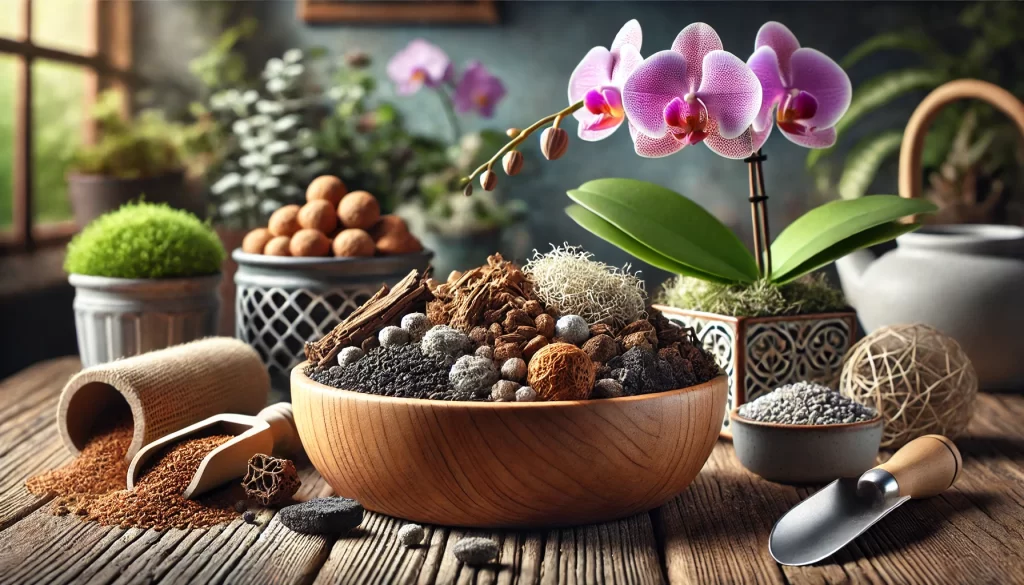
Choosing the right potting mix is essential for keeping orchids healthy and thriving. Unlike most plants, orchids do not grow well in regular soil, as their roots need air circulation and proper drainage. Using the wrong medium can lead to root rot, poor growth, and even death. In this guide, you’ll learn how to choose the best potting mix for orchids and how to prepare it for optimal growth.
Why Orchids Need a Special Potting Mix
Orchid roots are different from those of most houseplants. In nature, many orchids are epiphytes, meaning they grow on trees and absorb moisture and nutrients from the air. Because of this, they require a light, well-draining potting mix that mimics their natural environment.
Problems with Regular Soil
❌ Holds too much moisture, leading to root rot
❌ Blocks airflow, suffocating the roots
❌ Compacts over time, making it difficult for the orchid to absorb nutrients
Benefits of a Proper Orchid Potting Mix
✅ Provides good drainage to prevent overwatering
✅ Allows air circulation around the roots
✅ Retains the right amount of moisture without suffocating the plant
Best Ingredients for an Orchid Potting Mix
A good orchid mix should include a combination of materials that ensure drainage, aeration, and moisture retention. Here are some of the best ingredients:
1. Pine Bark 🌲
🔹 One of the most popular choices for orchid growers
🔹 Provides excellent airflow and drainage
🔹 Breaks down over time and needs replacement every 1-2 years
2. Sphagnum Moss 🌿
🔹 Retains moisture well, making it ideal for dry climates
🔹 Helps orchids with weak or damaged roots recover
🔹 Can be used alone or mixed with other materials
3. Coconut Husk 🥥
🔹 Holds moisture while still allowing air circulation
🔹 Lasts longer than pine bark and is more sustainable
🔹 Can retain salts, so it should be soaked before use
4. Charcoal 🔥
🔹 Helps absorb toxins and keeps the potting mix fresh
🔹 Improves drainage and prevents root diseases
🔹 Works well when mixed with bark or moss
5. Perlite ⬜
🔹 Lightweight volcanic rock that improves drainage
🔹 Prevents compaction of the mix
🔹 Works best when combined with bark or moss
6. LECA (Lightweight Expanded Clay Aggregate) 🏺
🔹 Absorbs and releases moisture slowly
🔹 Can be used for semi-hydroponic orchid growing
🔹 Requires careful monitoring of water levels
How to Choose the Best Potting Mix for Your Orchid Type
Not all orchids have the same needs. Some prefer drier conditions, while others need more moisture. Here’s a guide to choosing the best mix based on your orchid type:
🌸 Phalaenopsis (Moth Orchid)
Best mix: Pine bark + sphagnum moss
💡 Needs moderate moisture and airflow
🌿 Cattleya
Best mix: Pine bark + charcoal + perlite
💡 Prefers a well-draining, airy mix
🌺 Dendrobium
Best mix: Coconut husk + perlite + charcoal
💡 Requires good drainage but some moisture retention
🌳 Oncidium (Dancing Lady Orchid)
Best mix: Sphagnum moss + bark + charcoal
💡 Likes a mix that retains more moisture
💜 Vanda
Best mix: LECA or large bark pieces
💡 Thrives in a more hydroponic setup with excellent airflow
How to Prepare and Use Orchid Potting Mix
Once you’ve chosen the right mix, it’s important to prepare it properly before potting your orchid.
Steps to Prepare the Mix
1️⃣ Soak the materials: Bark, coconut husk, and moss should be soaked in water for a few hours before use. This helps remove impurities and ensures they hold the right amount of moisture.
2️⃣ Drain and rinse: After soaking, drain the materials and rinse them to remove dust or unwanted chemicals.
3️⃣ Mix the ingredients: Combine the materials in a bowl based on your orchid’s specific needs.
4️⃣ Repot your orchid: Gently remove the orchid from its old pot, trim any dead roots, and place it in the fresh mix.
How Often Should You Change the Potting Mix?
Over time, organic materials like bark and moss will break down, making it harder for the orchid to absorb nutrients and water properly.
🌿 Signs it’s time to repot your orchid:
✅ The potting mix looks decomposed and compacted
✅ Water is not draining properly
✅ Roots appear mushy or rotten
✅ The orchid hasn’t been repotted in over two years
To keep your orchid healthy, repot it every 1-2 years with fresh potting mix.
Common Mistakes to Avoid When Using Orchid Potting Mix
🚫 Using regular soil – Orchids need a breathable mix, not dense garden soil.
🚫 Packing the mix too tightly – This restricts airflow and suffocates the roots.
🚫 Not soaking the mix before use – Dry bark and moss won’t retain water properly.
🚫 Ignoring drainage – Always use a pot with drainage holes.
Conclusion: The Right Potting Mix Leads to Healthy Orchids
Choosing the best potting mix for your orchid is key to ensuring proper growth, strong roots, and frequent blooms. By selecting a mix that balances moisture retention, drainage, and aeration, you can create the perfect environment for your orchid to thrive.
🌱 Have you tried different orchid potting mixes? Share your experience in the comments!

Critical Observator offers expert tips and guides to make indoor plant care easy, enjoyable, and accessible.