
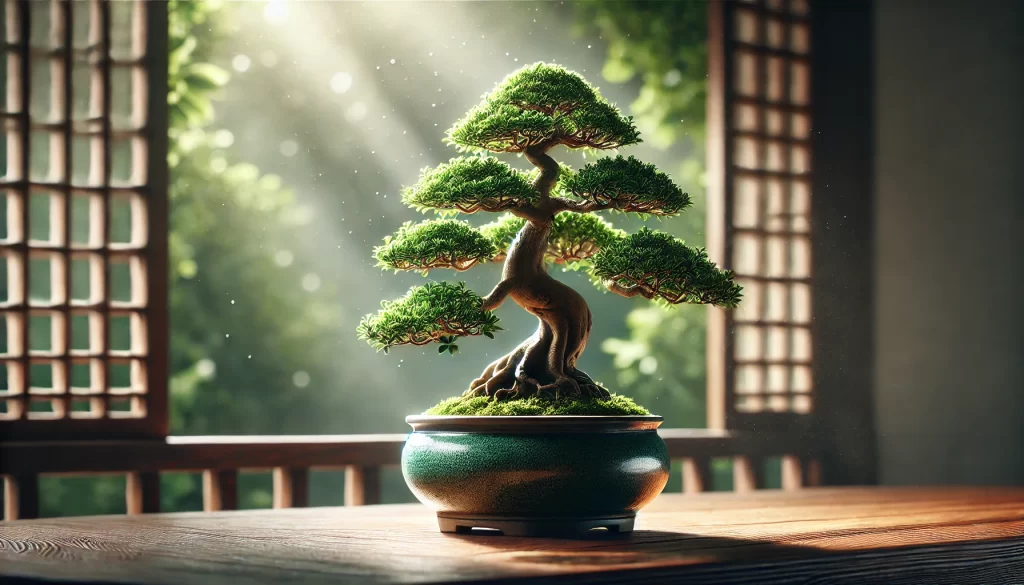
How to care for a bonsai may seem challenging at first, but with the right techniques and a little patience, anyone can grow a healthy and vibrant miniature tree. Bonsai is an ancient art that requires attention to detail, but the satisfaction of watching it grow and develop makes all the effort worthwhile. In this guide, you’ll learn everything you need to know to start caring for your bonsai correctly.
What Is a Bonsai?
Bonsai is not a specific plant species but rather a cultivation technique that aims to miniaturize trees through pruning, wiring, and root growth control. Although traditionally associated with Japanese culture, this art originated in China, where it was known as “penjing.” The idea behind bonsai is to create an artistic representation of nature on a small scale, keeping the tree balanced and harmonious.
Choosing the Right Species
If you’re new to the bonsai world, it’s crucial to choose a species that suits your experience level and the environment where it will be grown. Some ideal options for beginners include:
- 🌿 Ficus (Ficus retusa) – Easy to care for, tolerant to pruning, and well-suited for indoor environments.
- 🌲 Juniper (Juniperus spp.) – A classic bonsai species that prefers outdoor settings and requires moderate watering.
- 🌳 Serissa (Serissa foetida) – Known as the “Tree of a Thousand Stars” due to its small white flowers.
- 🍊 Pomegranate (Punica granatum) – Produces small fruits and flowers, adding a unique touch to the bonsai.
Proper Watering: Avoiding Overwatering or Underwatering
Watering is one of the most crucial aspects of bonsai care. The most common mistake beginners make is watering too much or too little. To get the watering frequency right, follow these tips:
✅ Check the soil daily – Insert a finger about 2 cm (1 inch) deep into the soil. If it’s dry, it’s time to water.
✅ Avoid overwatering – Excess water can cause root rot and kill the plant. Ensure the pot has proper drainage.
✅ Use chlorine-free water – Whenever possible, use filtered water or let tap water sit for a few hours before watering.
Lighting: Where to Place Your Bonsai?
Light is essential for the healthy growth of a bonsai. Most species require at least 4 to 6 hours of direct sunlight per day. Here are some important tips:
- ☀️ Outdoor bonsai: Preferably placed where they receive morning sunlight and partial shade in the afternoon.
- 💡 Indoor bonsai: Position near a well-lit window or use grow lights.
- ❄️ Avoid sudden changes: Don’t move your bonsai frequently, as this can stress the plant.
Pruning and Shaping: Keeping Your Bonsai Beautiful
Pruning is essential to maintain the shape of the bonsai and encourage healthy growth. There are two main types of pruning:
✂️ Maintenance pruning – Removes unwanted shoots, dead leaves, and branches that disrupt the tree’s balance. It should be done regularly.
🌿 Structural pruning – Defines the tree’s shape and is done at specific times of the year. It requires more technique and planning.
Additionally, wiring with aluminum or copper wires can be used to guide branch growth and create elegant shapes.
Fertilization: Properly Nourishing Your Bonsai
Since bonsai soil is limited, regular fertilization is essential to provide the necessary nutrients. Use a balanced fertilizer with nitrogen (N), phosphorus (P), and potassium (K) to stimulate growth and strengthen the roots.
- 🌱 Spring and summer: Fertilize every 15 days to promote growth.
- 🍂 Autumn and winter: Reduce frequency as the plant enters dormancy.
- 💡 Use organic or liquid bonsai-specific fertilizers to avoid excessive mineral salts in the soil.
Repotting: When and How to Do It?
Repotting is crucial to prevent the roots from becoming too tight in the pot, which can hinder water and nutrient absorption.
🔄 Frequency: Every 2–3 years for slow-growing species and annually for fast-growing species.
🪴 Repotting step-by-step:
1️⃣ Carefully remove the plant from the pot.
2️⃣ Remove some of the old soil and untangle the roots.
3️⃣ Trim about 30% of the longest and thickest roots.
4️⃣ Place the plant in a slightly larger pot with fresh soil.
5️⃣ Water well and keep it in a shaded area for the first few days.
Common Problems and How to Solve Them
Even with proper care, your bonsai may develop some issues. Here’s how to fix them:
🚨 Yellowing leaves → Could be due to overwatering or nutrient deficiency. Adjust watering and fertilization.
🐜 Pests like aphids and scale insects → Use neem oil or a natural insecticide.
🍂 Dry branches → Indicates the need for pruning or possible root issues. Check the soil condition.
The Art of Caring for a Bonsai
Caring for a bonsai goes beyond simple watering and pruning. It is a continuous process of learning, patience, and dedication. Over time, you’ll develop a keen eye for understanding your miniature tree’s needs. Remember, every bonsai has its own growth rhythm, and part of the beauty of this art lies in respecting and appreciating that time.
Now that you know the basics, why not choose your first bonsai species and embark on this incredible journey? 🌿✨

Critical Observator offers expert tips and guides to make indoor plant care easy, enjoyable, and accessible.