
Published on April 10, 2025
Author: Emily Parker
We all have them — bathrooms with no windows, office corners far from natural light, or basement rooms where the sun never shines. But just because a room lacks sunlight doesn’t mean it has to lack life.
With the right approach, you can successfully grow and maintain indoor plants in windowless spaces. It requires some planning, a bit of creativity, and a clear understanding of what plants can truly handle low-light or artificial light conditions.
In this guide, we’ll walk you through everything you need to know to care for plants in a windowless room — from choosing the right species to using artificial lighting, adjusting your watering habits, and keeping your greenery vibrant in the darkest of places.
Table of Contents
- Can Plants Really Live Without Sunlight?
- Best Types of Indoor Plants for Windowless Rooms
- How to Use Artificial Light Effectively
- Other Environmental Factors to Consider
- Watering and Humidity in Windowless Spaces
- Common Mistakes to Avoid
- Stylish Placement Ideas for Dark Rooms
- Final Tips and Plant Care Routine
- Final Thoughts
1. Can Plants Really Live Without Sunlight?
Technically, no plant can survive without light — light is essential for photosynthesis. But that doesn’t mean you need natural sunlight. Many indoor plants can adapt to low-light or artificial light sources, especially LED grow lights or fluorescent bulbs.
🌱 What counts as “light” for plants?
- Natural sunlight = ideal for most, but not essential
- Bright artificial light (full-spectrum LEDs) = effective alternative
- Standard room lights = generally not strong enough alone, unless placed very close
So yes — with the right artificial lighting setup, plants can live and thrive in a windowless room.
2. Best Types of Indoor Plants for Windowless Rooms
Not all plants can adapt to low-light conditions. Here are some tried-and-true options that perform well without direct sunlight:
✅ Top Low-Light Champions:
- ZZ Plant (Zamioculcas zamiifolia) – practically thrives on neglect, very tolerant
- Snake Plant (Sansevieria) – architectural look, highly resilient
- Pothos (Epipremnum aureum) – excellent for shelving, air-purifying
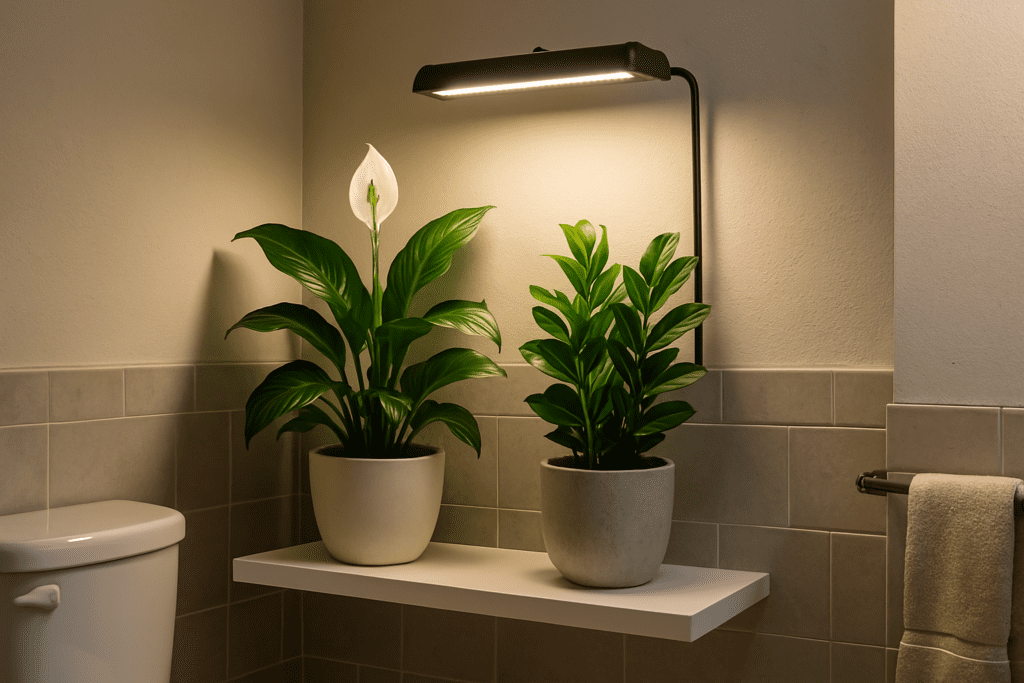
- Peace Lily (Spathiphyllum) – lush, dramatic foliage, flowers even in dim rooms
- Cast Iron Plant (Aspidistra elatior) – as tough as the name suggests
- Chinese Evergreen (Aglaonema) – colorful, patterned leaves, low-maintenance
- Parlor Palm (Chamaedorea elegans) – soft tropical foliage, handles low light well
- Spider Plant (Chlorophytum comosum) – adaptable and fast-growing
These plants don’t just survive — they thrive under artificial conditions when cared for correctly.
3. How to Use Artificial Light Effectively
If your room has no windows, artificial lighting becomes the most important factor in plant survival.
💡 Types of Grow Lights:
| Type | Pros | Cons |
|---|---|---|
| LED Grow Lights | Energy-efficient, long-lasting, customizable spectrum | Higher upfront cost |
| Fluorescent Tubes | Affordable, good for leafy greens | Less powerful, bulkier |
| Compact Fluorescents (CFLs) | Easy to install, good for small spaces | May generate heat |
| Full-Spectrum Bulbs | Mimic natural daylight, ideal for houseplants | Not as strong as dedicated grow lights |
📏 Placement Tips:
- Keep light 10–30 cm above the plant, depending on intensity
- Run lights for 12–16 hours/day
- Use a timer to simulate a natural day-night cycle
- Adjust height and position as the plant grows
A mix of warm and cool white bulbs can also work if you’re not using dedicated grow lights.
4. Other Environmental Factors to Consider
Plants in windowless rooms deal with more than just light challenges. Let’s break it down:
🌡️ Temperature
- Most houseplants prefer 18–24ºC
- Avoid placing near air vents, heaters, or cold tiles
💧 Air Circulation
- Windowless rooms = often stagnant air
- Use a small fan on low to prevent mold or fungus
- Open doors regularly to freshen up the air
🪴 Soil and Drainage
- Use well-draining potting mix to avoid soggy roots
- Terracotta pots are great for airflow if humidity isn’t too low
5. Watering and Humidity in Windowless Spaces
With less light, plants use less water — which means overwatering is the #1 killer in these environments.
💧 Watering Tips:
- Always test soil with your finger before watering
- Use pots with drainage holes
- Water less frequently, but thoroughly when you do
- Wipe leaves regularly to remove dust and promote photosynthesis
💦 Boosting Humidity:
- Group plants together to create a microclimate
- Use a humidifier, especially in winter
- Try a pebble tray under the pot for gentle humidity
6. Common Mistakes to Avoid
Here’s what NOT to do when caring for plants in windowless rooms:
❌ Using standard light bulbs — they lack the right spectrum
❌ Overwatering — low light = slow growth = less water needed
❌ Choosing the wrong plant — not all can adapt to low-light
❌ Ignoring airflow — stale air encourages mold and pests
❌ Neglecting fertilization — even low-light plants need nutrients (every 4–6 weeks)
Avoiding these errors will save you frustration (and more than a few plants).
7. Stylish Placement Ideas for Dark Rooms
Just because a room is dark doesn’t mean it has to be boring. With good design, you can integrate plants beautifully into any space — even those without windows.
🛋️ Ideas to Try:
- Shelf-mounted grow light above a row of trailing pothos
- LED spotlight in a bathroom niche with a peace lily
- Vertical plant stand with strip lighting in a hallway corner
- Wall-mounted grow light with art-style arrangement
- Glass dome terrarium under a warm white bulb
🌿 Bonus tip: Choose planters and pots in glossy white or light tones to reflect available light.
8. Final Tips and Plant Care Routine
A solid routine makes a huge difference. Here’s a basic care plan for plants in a windowless room:
Daily
- Check light timers
- Ensure fan or door is circulating air
Weekly
- Check soil moisture
- Dust leaves
- Top up pebble tray if used
Monthly
- Rotate plants for even exposure
- Inspect for pests
- Fertilize lightly (during growing season)
9. Final Thoughts
Caring for indoor plants in a windowless room might seem like a challenge — but with the right approach, it’s completely doable. Artificial light is your best friend, and once you understand your plants’ basic needs, they’ll thrive just as happily as in a sun-drenched space.
So whether you’re greening up a bathroom, a cubicle, or a basement nook, remember: plants bring life to any space, light or no light. All they need is a little help from you — and maybe a good LED bulb.

Critical Observator offers expert tips and guides to make indoor plant care easy, enjoyable, and accessible.