
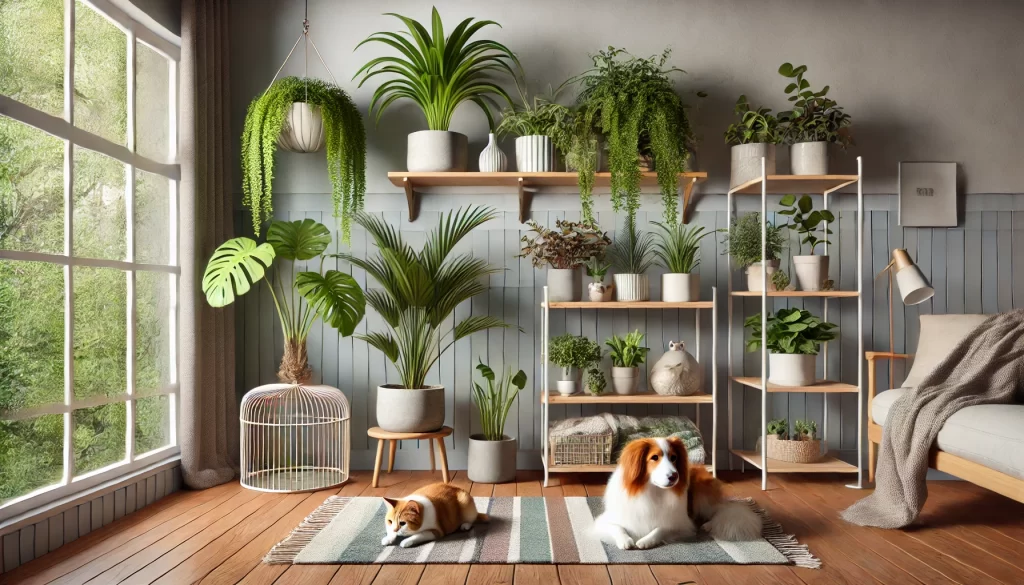
For pet owners, how to choose pet-friendly indoor plants is essential to protect cats and dogs from toxic greenery. Many common houseplants can be harmful if ingested, but there are plenty of pet-friendly options that add beauty to your home without risk to your furry friends.
This guide will help you select the best pet-friendly indoor plants, avoid toxic species, and provide care tips to keep both your plants and pets happy.
1. Why Pet-Friendly Plants Matter
Many popular houseplants contain toxic compounds that can cause vomiting, diarrhea, or even severe poisoning in pets. By selecting non-toxic plants, you ensure a safe and healthy environment for your cats and dogs.
✔ Prevents Accidental Poisoning – Some pets chew on leaves out of curiosity.
✔ Creates a Safe Living Space – Pet-safe plants ensure peace of mind.
✔ Enhances Indoor Air Quality – Many safe plants also purify the air.
2. Best Pet-Friendly Indoor Plants
The following plants are safe for cats and dogs according to the ASPCA (American Society for the Prevention of Cruelty to Animals).
🌿 Low-Maintenance Pet-Safe Plants
✅ Areca Palm (Dypsis lutescens) – Elegant and easy to care for.
✅ Boston Fern (Nephrolepis exaltata) – Prefers humid environments and is completely non-toxic.
✅ Calathea (Calathea spp.) – Stunning foliage, thrives in indirect light.
🌱 Air-Purifying Pet-Friendly Plants
🌿 Parlor Palm (Chamaedorea elegans) – Removes toxins and thrives in low light.
🌿 Spider Plant (Chlorophytum comosum) – Filters indoor air and grows quickly.
🌿 Prayer Plant (Maranta leuconeura) – Unique leaf movement and safe for pets.
🌵 Pet-Safe Succulents & Decorative Plants
🌱 Haworthia (Haworthia spp.) – Looks like an aloe vera but is non-toxic.
🌱 Baby Rubber Plant (Peperomia obtusifolia) – Thick leaves, easy to care for.
🌱 Cast Iron Plant (Aspidistra elatior) – Tough and resilient, perfect for pet-friendly homes.
📌 Tip: Always check a plant’s toxicity status before bringing it into a pet-friendly home.
3. Plants That Are Toxic to Pets (Avoid These!)
Many common houseplants can be dangerous to pets if ingested.
🚫 Toxic Plants for Cats & Dogs
❌ Pothos (Epipremnum aureum) – Causes irritation and vomiting.
❌ Aloe Vera – Contains compounds harmful to pets.
❌ Philodendron (Philodendron spp.) – Can cause swelling and drooling.
❌ Peace Lily (Spathiphyllum) – Toxic to both cats and dogs.
❌ Snake Plant (Sansevieria trifasciata) – Can cause nausea and lethargy.
📌 Tip: If you already own a toxic plant, keep it out of reach on high shelves or use hanging planters.
4. How to Create a Pet-Friendly Indoor Garden
🐾 Step 1: Choose Pet-Safe Locations
✅ Place plants on shelves or plant stands to prevent pets from digging in the soil.
✅ Use hanging planters for trailing plants.
🐶 Step 2: Use Protective Barriers
✅ Add decorative stones or mulch to cover soil (prevents pets from digging).
✅ Use cat grass or pet-safe wheatgrass to distract curious pets.
🐾 Step 3: Train Your Pets to Avoid Plants
✅ Use citrus peels or pet-safe deterrent sprays to keep cats away.
✅ Provide alternative chew toys for pets that nibble on leaves.
📌 Tip: If your pet eats a plant and shows signs of poisoning, contact a veterinarian immediately.
5. Common Mistakes to Avoid When Choosing Pet-Friendly Plants
| Mistake | Problem | Solution |
|---|---|---|
| Assuming all houseplants are safe | Some common plants are toxic | Always check ASPCA’s toxic plant list |
| Not securing plants properly | Pets can knock over pots | Use stable pots and hanging planters |
| Using chemical fertilizers | Some fertilizers are toxic if ingested | Use organic, pet-safe fertilizers |
| Keeping toxic plants at low levels | Pets may chew leaves out of curiosity | Place toxic plants out of reach |
6. How to Care for Pet-Safe Indoor Plants
✔ Use Pet-Safe Soil – Avoid pesticides and chemical fertilizers.
✔ Provide Indirect Light – Many pet-safe plants thrive in low to medium light.
✔ Water According to Needs – Overwatering can cause root rot and attract pests.
✔ Trim Damaged Leaves – Prevents pets from being attracted to dying foliage.
Final Thoughts
Choosing pet-friendly indoor plants ensures a safe and healthy home for both your plants and pets. By selecting non-toxic varieties, placing plants strategically, and using natural deterrents, you can create a beautiful, green space without risk to your furry friends.
With proper care, your pet-friendly indoor garden will flourish while keeping your pets safe and happy!

Critical Observator offers expert tips and guides to make indoor plant care easy, enjoyable, and accessible.