
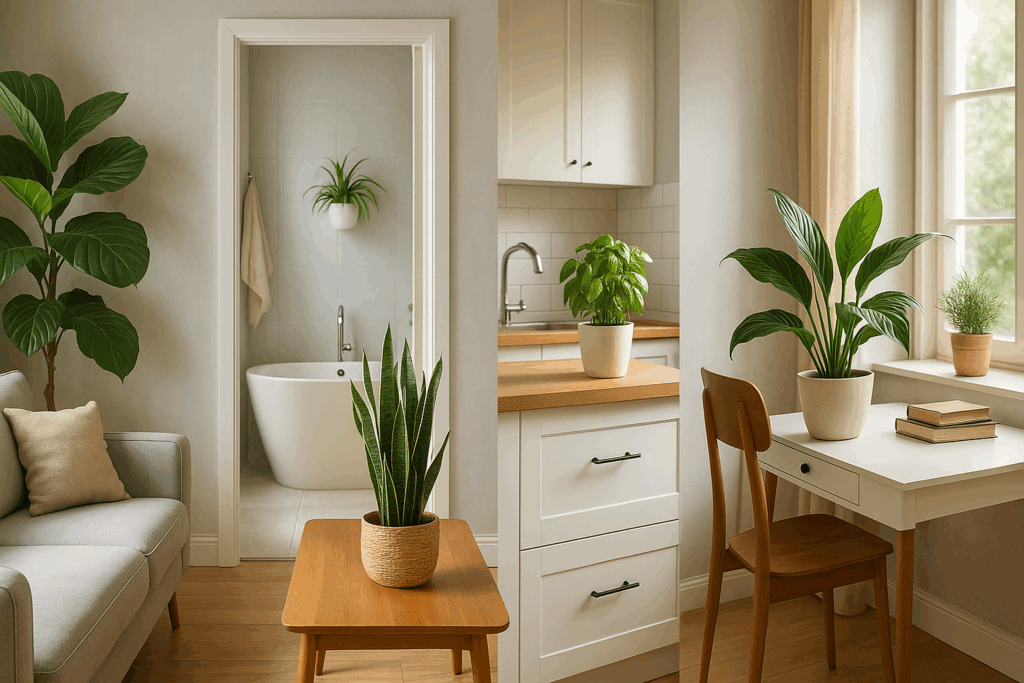
Note from the Author
As a lifelong indoor gardening enthusiast, I’ve learned that choosing the right plant for each room can transform your entire home—not just visually, but emotionally and functionally. This guide is the result of countless plant experiments, successes, and failures across every type of room and lighting condition. I’m here to help you skip the trial-and-error phase and go straight to thriving greenery.
Search Intent
How to choose the right plant for every room in your home—and make each space more beautiful, functional, and healthy.
Audience
This guide is for anyone looking to decorate their home with plants, especially beginners and intermediate plant lovers who want sustainable, room-by-room solutions.
Table of Contents
- Understanding Your Home’s Microclimates
- Living Room: The Statement Space
- Kitchen: Practical Greenery
- Bedroom: Calm, Clean, and Restorative
- Bathroom: Humidity-Loving Plants
- Hallway and Entryway: Low-Light Survivors
- Home Office: Plants That Boost Productivity
- Pet Safety and Toxicity
- Common Mistakes to Avoid
- 30-Day Room-by-Room Plant Plan
- Mini-FAQ
- Useful Resources
- About the Author
Understanding Your Home’s Microclimates
Every home is made up of several microclimates. The direction your windows face, your heating/cooling setup, humidity, and room usage all influence what plants will thrive.
Key Elements to Assess:
- Light: Direct, indirect, low-light
- Humidity: Bathrooms and kitchens tend to be humid; bedrooms and hallways are drier.
- Temperature: Look for rooms with temperature fluctuations (e.g., near entryways).
- Space: Small shelves vs. wide open corners
Before choosing plants, take time to observe each room at different times of day.
Living Room: The Statement Space
The living room usually receives the most attention and the most natural light. It’s perfect for bold plant statements.
Best Plants for the Living Room:
- Fiddle Leaf Fig (Ficus lyrata): Large, sculptural leaves that demand attention. Requires bright, indirect light.
- Monstera deliciosa: Iconic split leaves and a tropical vibe. Loves medium to bright light.
- Rubber Plant (Ficus elastica): Dark green, waxy leaves. Low maintenance and visually striking.
Tips for Living Room Plant Styling:
- Use large floor-standing planters
- Rotate plants weekly for uniform growth
- Mix plant heights to add visual interest
Kitchen: Practical Greenery
Kitchens offer a mix of light and humidity, making them ideal for both decorative and useful plants.
Best Plants for the Kitchen:
- Herbs: Basil, mint, rosemary – practical and fragrant.
- Spider Plant (Chlorophytum comosum): Thrives in humidity and is non-toxic.
- Aloe Vera: Loves sunlight and provides healing gel for cuts and burns.
Kitchen Placement Ideas:
- Hang herbs above your sink or near a window
- Use wall-mounted shelves for trailing plants
- Avoid placing plants near the stove
Bedroom: Calm, Clean, and Restorative
Your bedroom should be a haven. Choose plants that purify the air and create a tranquil environment.
Best Plants for the Bedroom:
- Snake Plant (Sansevieria): Emits oxygen at night. Perfect for sleep support.
- Lavender: Natural sleep aid with a relaxing scent.
- Peace Lily: Filters indoor toxins and looks elegant.
Bedroom Plant Care Tips:
- Choose low-maintenance plants
- Avoid overwatering to reduce mold risk
- Use soft-colored pots that blend into the décor
Bathroom: Humidity-Loving Plants
Bathrooms offer a unique environment with high humidity and variable light.
Best Plants for the Bathroom:
- Boston Fern (Nephrolepis exaltata): Absorbs moisture and thrives in steamy spaces.
- Pothos (Epipremnum aureum): Incredibly adaptable and fast-growing.
- Orchids: Love warmth and humidity, and add elegance.
Bathroom Placement Suggestions:
- High shelves or hanging pots
- Windowsills with filtered light
- Avoid drafty areas near fans
Hallway and Entryway: Low-Light Survivors
These transitional spaces often lack natural light and stable conditions.
Best Plants for Hallways:
- ZZ Plant (Zamioculcas zamiifolia): Virtually indestructible.
- Cast Iron Plant (Aspidistra elatior): Hardy and forgiving.
- Philodendron: Loves shade and easy to grow.
Tips:
- Opt for self-watering pots if neglected often
- Use plant stands to add visual height
- Clean leaves regularly to remove dust
Home Office: Plants That Boost Productivity
A well-designed home office should support focus, clean air, and calm energy.
Best Plants for Home Offices:
- English Ivy (Hedera helix): Reduces airborne mold and toxins.
- Chinese Evergreen (Aglaonema): Tolerates low light and neglect.
- Succulents (Echeveria, Haworthia): Compact and stylish.
Home Office Styling Ideas:
- Use matching pots for a minimalist look
- Position plants at eye level for soothing visual breaks
- Avoid heavily scented plants
Pet Safety and Toxicity
If you have pets, plant choice becomes more complex.
Pet-Friendly Plants:
- Spider Plant
- Areca Palm
- Calathea
Toxic Plants to Avoid:
- Fiddle Leaf Fig
- Peace Lily
- English Ivy
Always check the ASPCA list or consult your vet before bringing new plants home.
Common Mistakes to Avoid
- Using the same plant everywhere: Each room is unique.
- Overwatering in humid spaces: Bathrooms and kitchens often need less water.
- Ignoring low-light stress: Some rooms may be too dark.
- Neglecting airflow: Crowded plants can develop fungal issues.
- Skipping toxicity research: Dangerous for pets and kids.
30-Day Room-by-Room Plant Plan
Week 1: Assess lighting and humidity in every room. Take notes.
Week 2: Purchase plants based on room conditions. Start with 2–3 rooms.
Week 3: Style each space thoughtfully. Choose containers and placement.
Week 4: Observe growth and adjust care. Set a watering/fertilizing routine.
Mini-FAQ
Q1: Can I use grow lights instead of natural light? A1: Yes. LED grow lights can support most plants in low-light rooms.
Q2: What’s the easiest plant for beginners? A2: The ZZ plant is nearly foolproof and adapts to many conditions.
Q3: Do plants really improve air quality? A3: Yes, many help reduce toxins, especially English Ivy and Peace Lily.
Q4: How often should I water houseplants? A4: It depends on species and environment, but once a week is common.
Q5: Can I keep plants in windowless rooms? A5: Only if you use artificial lighting that mimics sunlight.
Q6: Are succulents good for humid rooms? A6: No. They prefer dry environments and can rot in excess humidity.
Q7: What are the signs of overwatering? A7: Yellow leaves, mushy stems, and mold on soil.
Useful Resources
- ASPCA Plant Toxicity List: https://www.aspca.org/pet-care/animal-poison-control/toxic-and-non-toxic-plants
- NASA Clean Air Study (Archived Summary): https://ntrs.nasa.gov/citations/19930073077

Emily Parker is a plant enthusiast, writer, and editor at Critical Observator. Passionate about indoor greenery and its impact on wellness, she brings research-based guidance with a friendly touch to every post.