
Note from the Author
How to choose the right pot for your orchid is the single most important decision you can make as a beginner. The right container controls root health, water balance, airflow, and blooming success. As someone who has grown orchids for more than a decade, I’ve seen countless plants thrive or fail simply because of the pot. With the right choice, you set your orchid up for long-term growth and spectacular flowers.
How to choose the right pot for your orchid
Learning how to choose the right pot for your orchid is not just about aesthetics. While a beautiful pot adds charm to your home, the wrong choice can suffocate roots, hold too much moisture, and prevent blooming. A proper orchid pot allows air circulation, drains quickly, and fits the root ball snugly without leaving too much extra space. Many beginners fail because they choose oversized decorative pots or containers without holes. This guide provides practical advice on every step, so you never have to wonder again if your orchid is suffering below the surface.
Search Intent
How to choose the right pot for your orchid with clarity, covering pot type, size, medium, and repotting to ensure healthy roots and strong flowering.
Audience
Beginners, orchid collectors, and home gardeners who want a clear, practical guide that prevents root rot and gives them confidence when repotting.
Table of Contents
- Why the Pot Matters for Orchid Health
- Best Types of Orchid Pots and Their Uses
- How to Choose the Right Pot for Your Orchid by Size
- Matching Pots with Potting Media
- Potting and Repotting Tips for Beginners
- How to Use Decorative Pots Safely
- 30-Day Orchid Potting Success Plan
- Mini FAQ
- Useful Resources
- About the Author
Why the Pot Matters for Orchid Health
When you learn how to choose the right pot for your orchid, you begin to understand the biology of its roots. Unlike houseplants that grow in soil, most orchids are epiphytes, which means they cling to tree trunks and absorb water from rain and humidity. Their roots must breathe. The pot you choose needs to replicate those natural conditions. Without airflow, roots suffocate. Without quick drainage, roots rot. A container that is too big leaves excess moisture sitting in the mix. A pot that is too tight stunts growth.
In simple terms: the pot acts like the lungs of your orchid. If you want lasting health, choose a pot that lets roots do what they are designed to do—absorb, dry, and breathe. This is why every orchid grower must master how to choose the right pot for your orchid before worrying about fertiliser or watering.
Best Types of Orchid Pots and Their Uses
Clear Plastic Pots
When people ask me how to choose the right pot for your orchid as a beginner, I often recommend clear plastic pots. They allow you to see roots, track moisture, and even observe photosynthesis through the roots of Phalaenopsis orchids. They are light, affordable, and easy to slip into decorative containers. The downside is they are flimsy, degrade under sun, and may need stakes for tall orchids.
Terracotta and Clay Pots
If you tend to overwater, clay is your best friend. Learning how to choose the right pot for your orchid often leads to terracotta because it wicks away moisture and provides excellent airflow. Cattleya and Oncidium orchids thrive here. The drawback is that clay dries quickly and requires more frequent watering. It is also heavy and breakable.
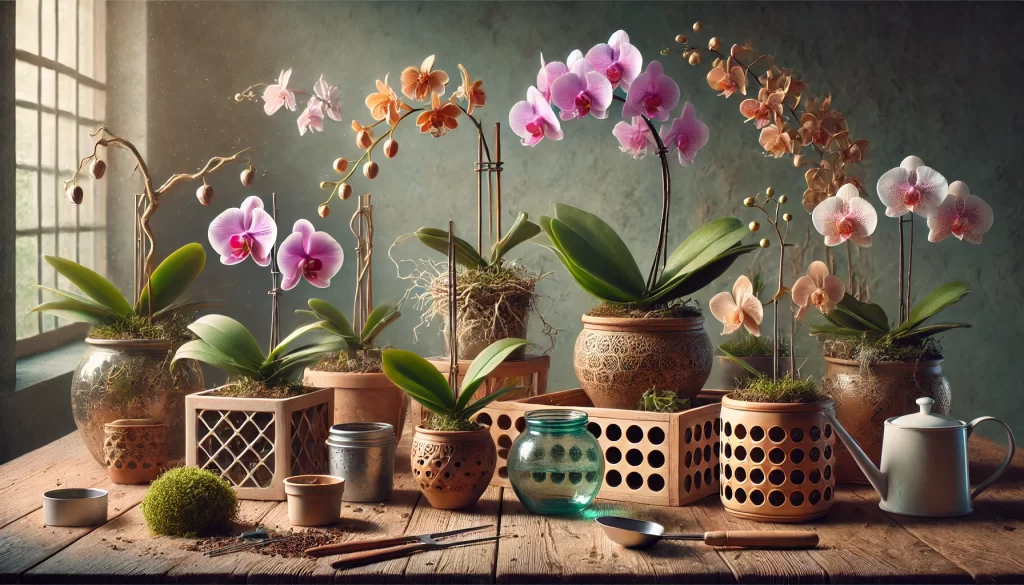
Ceramic Orchid Pots with Side Holes
Ceramic pots are stylish and sturdy. Many come with side holes that allow airflow while maintaining decorative appeal. They work well with bark mixes and make orchids look elegant indoors. But be cautious: some ceramics retain moisture and lack bottom drainage. Always inspect before using.
Wooden Slat Pots and Hanging Baskets
When studying how to choose the right pot for your orchid species like Vanda or Dendrobium, wooden baskets are ideal. They allow roots to hang freely, just like in the wild. They are perfect for humid homes or greenhouses but not for dry climates, since they need frequent watering.
Net and Mesh Pots
Advanced growers who want to explore semi-hydroponics often learn how to choose the right pot for your orchid using net or mesh pots. These provide maximum ventilation and drainage, working well with LECA or bark. The challenge is that roots may grow through the mesh, making repotting tricky.
How to Choose the Right Pot for Your Orchid by Size
Size is critical. Understanding how to choose the right pot for your orchid includes avoiding oversized containers. Orchids prefer being slightly root-bound. Ideally, the pot should give just one to two centimetres of space around the root ball. Too much space means water lingers in unused areas, leading to rot. Too little space restricts root expansion.
Repotting every one to two years is necessary as roots grow and media breaks down. When unsure, always choose a smaller pot rather than a bigger one. Healthy roots should fill about 70–80% of the pot volume.
Matching Pots with Potting Media
When you dive deeper into how to choose the right pot for your orchid, you realise it’s not just about the container but also the medium. Clear plastic pots work with bark or moss, where moisture can be monitored. Clay pots balance coarse bark with their natural breathability. Ceramic pots combine nicely with bark or coconut husk but should not be paired with moss. Mesh pots are excellent with LECA, while wooden baskets work with large bark chunks or even bare-root growing.
The golden rule: never combine a moisture-retentive pot with a water-holding medium. Clay plus moss equals rot. Plastic plus sphagnum can work if you are careful, but it demands precision. The harmony between pot and medium determines success.
Potting and Repotting Tips for Beginners
Mastering how to choose the right pot for your orchid includes learning safe potting practices. Always sterilise containers before use. Place large bark pieces at the bottom for airflow. Position the orchid so its base sits above the mix, not buried inside it. Use clips or stakes to stabilise tall flower spikes. After repotting, water lightly and wait several days for root wounds to heal before heavy watering.
Take care to trim dead roots, shake off decomposed media, and gently spread healthy roots in the new container. Repotting is not about forcing the orchid into shape but giving it space to thrive naturally.
How to Use Decorative Pots Safely
A common beginner question is how to choose the right pot for your orchid when you want style. Decorative cachepots are beautiful, but they can harm roots if used incorrectly. The solution is simple: keep your orchid in a ventilated grow pot, then place that pot inside the decorative container. After watering, remove the grow pot, drain thoroughly, and then return it. Never plant directly in a decorative pot without holes.
30-Day Orchid Potting Success Plan
Week 1: Evaluate your orchid, its roots, and current container.
Week 2: Select a new pot type and size, and prepare fresh medium.
Week 3: Repot carefully, following best practices.
Week 4: Monitor root adjustment, watering balance, and overall health.
By the end of 30 days, you will not only know how to choose the right pot for your orchid but also feel confident repeating the process for years to come.
Mini FAQ
Can I use houseplant pots for orchids? Only if they have big drainage holes.
Why are clear pots recommended? They let you monitor roots and support photosynthesis.
Can I use a decorative pot without holes? Yes, if the orchid stays in a grow pot you can remove for watering.
When do I repot? Every 1–2 years, or when roots overflow or media decomposes.
Is a bigger pot better? No. Orchids grow best slightly snug in their container.
Useful Resources

Critical Observator offers expert tips and guides to make indoor plant care easy, enjoyable, and accessible.