
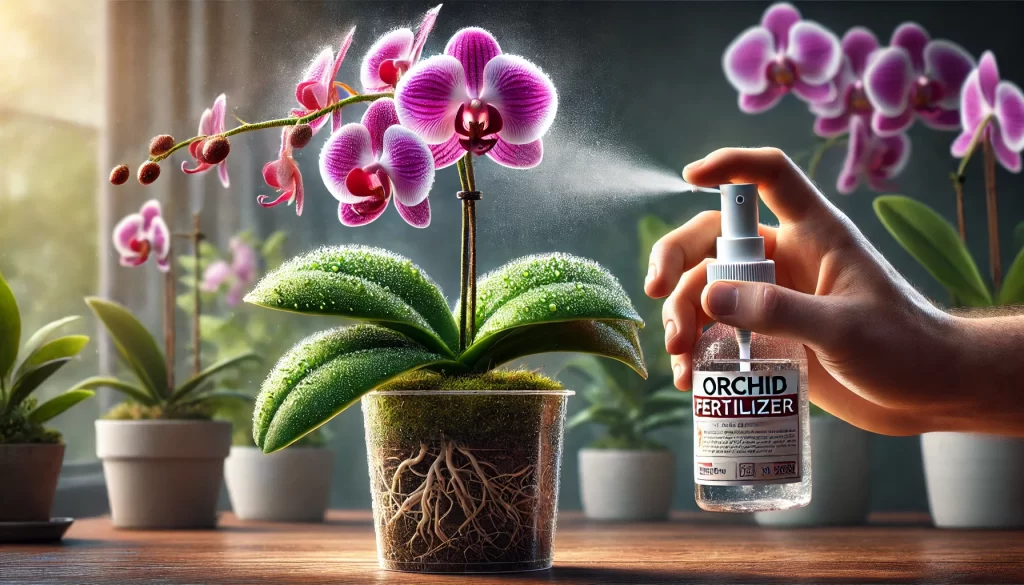
Fertilizing orchids correctly is essential for healthy growth, strong roots, and vibrant blooms. Unlike many houseplants, orchids have unique nutrient requirements that depend on their growth cycle. Using the right fertilizer at the right time can make the difference between a thriving orchid and one that struggles to bloom.
In this guide, you’ll learn how to fertilize orchids properly, the best types of fertilizers, and how to avoid common mistakes that could harm your plant.
Why Do Orchids Need Fertilizer?
In their natural habitat, orchids absorb nutrients from decaying leaves, rainwater, and tree bark. When grown in pots, they rely on us to provide the nutrients they need to develop healthy roots, strong leaves, and beautiful flowers.
🌿 Benefits of proper fertilization:
✅ Stimulates root and leaf growth
✅ Encourages more frequent and longer-lasting blooms
✅ Strengthens orchids against diseases and pests
✅ Helps recover from stress, such as repotting or environmental changes
🚫 What happens if you don’t fertilize?
- Slow growth and weak leaves
- Fewer or no flowers
- Increased vulnerability to diseases
Best Types of Fertilizers for Orchids
Not all fertilizers are created equal! The best fertilizers for orchids contain a balanced mix of nitrogen (N), phosphorus (P), and potassium (K), along with trace minerals like calcium and magnesium.
🌱 Common types of fertilizers:
1. Balanced Orchid Fertilizer (NPK 20-20-20)
🔹 Provides equal amounts of nitrogen, phosphorus, and potassium
🔹 Best for general growth and maintenance
🔹 Ideal for orchids in their growing phase
2. Bloom Booster Fertilizer (NPK 10-30-20 or 8-10-20)
🔹 High phosphorus content encourages blooming
🔹 Should be used when flower spikes are developing
🔹 Helps orchids produce larger and more vibrant flowers
3. Organic Fertilizers (Seaweed Extract, Worm Castings, Banana Peel Tea)
🔹 Natural and gentle, but slower-acting
🔹 Helps improve soil microbial activity
🔹 Best used as a supplement to chemical fertilizers
4. Slow-Release Orchid Fertilizer
🔹 Releases nutrients gradually over time
🔹 Convenient but harder to control compared to liquid fertilizers
🔹 Best for growers who don’t want to fertilize frequently
How to Fertilize Orchids Correctly
Applying fertilizer correctly is just as important as choosing the right type. Over-fertilizing can damage the roots, while under-fertilizing can slow growth.
🌱 Step-by-Step Fertilizing Guide
1️⃣ Dilute the fertilizer – Always mix fertilizer to half or quarter strength to prevent root burn.
2️⃣ Water before fertilizing – This prevents the roots from absorbing too many concentrated nutrients at once.
3️⃣ Apply the fertilizer – Pour the solution gently over the roots and leaves, avoiding direct contact with flowers.
4️⃣ Drain excess fertilizer – Let the pot drain completely to prevent salt buildup.
💡 Golden Rule: “Weekly, Weakly” – Fertilize once a week with a diluted solution for best results!
When to Fertilize Orchids?
🌿 Growth Phase (Spring & Summer) – Use a balanced fertilizer (NPK 20-20-20) every week.
🌸 Blooming Phase (Fall & Winter) – Switch to a bloom booster fertilizer (NPK 10-30-20) every 2 weeks.
⏳ Resting Phase (After Flowering) – Reduce fertilization to once a month or stop completely.
🚨 Signs of Over-Fertilizing:
❌ Brown or burned root tips
❌ Salt buildup on the potting mix
❌ Weak or limp leaves
🚨 Signs of Under-Fertilizing:
❌ Pale or yellowing leaves
❌ Slow growth
❌ No new flower spikes
Fertilizing Orchids in Different Potting Mixes
Your potting mix affects how often and how much you should fertilize.
🌱 Bark-Based Mix – Fertilize more often because bark breaks down nutrients slowly.
🌱 Moss-Based Mix – Fertilize less often as moss retains nutrients longer.
🌱 Semi-Hydroponic Orchids – Use a weaker solution with every watering to prevent salt buildup.
Conclusion: Healthy Orchids Need Proper Nutrition
Fertilizing your orchid correctly will ensure strong roots, lush leaves, and frequent blooms. Remember to use the right fertilizer for each growth stage and always dilute the solution to avoid damage.
🌸 Have you tried different fertilization methods? Share your experience in the comments!

Critical Observator offers expert tips and guides to make indoor plant care easy, enjoyable, and accessible.