
Published on March 23, 2025
by Emily Parker, indoor gardening specialist
Indoor plants can bring beauty, peace, and cleaner air into our homes. But just like outdoor gardens, they are vulnerable to disease. Indoor plant diseases often start quietly—yellowing leaves, odd spots, subtle wilting—and escalate if unnoticed. Many plant lovers unintentionally worsen the problem through overwatering, poor airflow, or contaminated tools.
Understanding the root causes, symptoms, and best treatment methods is essential to keeping your houseplants healthy and thriving. In this guide, you’ll learn exactly how to prevent and treat indoor plant diseases with practical, easy-to-follow strategies that work in any home environment.
Understanding Indoor Plant Diseases
What Are Indoor Plant Diseases?
📌 Indoor plant diseases are health issues caused by fungi, bacteria, or viruses. These microscopic invaders disrupt the normal function of your plant’s roots, leaves, and stems—often without early obvious signs.
Disease typically develops when plants are under stress or placed in unfavorable conditions, such as overly damp soil, poor ventilation, or overcrowded pots. Some diseases may spread rapidly, affecting entire collections if not treated promptly.
The Three Most Common Disease Types
- ✅ Fungal infections: Thrive in high moisture and poor airflow (e.g., root rot, powdery mildew).
- ✅ Bacterial diseases: Often enter through wounds in leaves or stems and spread in humid environments.
- ✅ Viral infections: Usually spread by pests or contaminated tools; no cure available.
Recognizing the Symptoms Early
Yellowing Leaves
Leaves turning yellow without signs of dryness often suggest overwatering or root rot. It could also indicate bacterial root disease or poor nutrient absorption.
Brown or Black Spots
Small spots that grow larger and darker are likely fungal or bacterial leaf spots. These often start at the edge of the leaf and spread inward, especially in humid rooms like bathrooms.
White or Gray Coating
A powdery white layer on the leaves points to powdery mildew, a common fungal infection. Gray mold (Botrytis) may appear fuzzy and attack flowers or stems.
Wilting Despite Moist Soil
⚠️ If the plant is well-watered but still limp, suspect root rot. Check roots for softness or a foul smell.
Stunted Growth or Twisted Leaves
Slowed growth, curling leaves, or discolored foliage can indicate a viral infection, particularly if other symptoms are absent. In this case, isolation is crucial.
What Causes Indoor Plant Diseases?
Understanding the causes is the best path to prevention.
✅ Overwatering
Too much water drowns roots and encourages fungi. It’s the most common cause of houseplant disease, especially when pots lack proper drainage.
✅ Poor Air Circulation
Still air allows moisture to linger, promoting the spread of mildew and mold. Grouping plants too closely also contributes to this issue.
✅ Contaminated Tools or Soil
Pruning tools that aren’t cleaned between uses can transfer pathogens. Using outdoor soil indoors can introduce fungi and bacteria.
✅ Weak or Stressed Plants
Plants with insufficient light, improper watering schedules, or incorrect temperatures are more susceptible to infection.
How to Prevent Indoor Plant Diseases
The good news? Most plant diseases are avoidable with consistent care.
📌 Use Quality Soil
Always choose a sterile, well-draining potting mix formulated for indoor plants. Avoid garden soil, which often carries microbes.
📌 Water Thoughtfully
Insert your finger into the soil—only water when the top inch is dry. Remove any excess water from saucers to prevent root rot.
📌 Improve Airflow
Give plants space to breathe. A small oscillating fan can work wonders in stagnant corners or during humid seasons.
📌 Keep Leaves Dry
Avoid splashing water on the leaves. Wet foliage encourages fungal growth, especially when the plant sits in low light.
📌 Isolate New Additions
Always quarantine new plants for 10–14 days before introducing them to your indoor collection.
📌 Sanitize Tools
Clean your shears and repotting tools with 70% isopropyl alcohol or a diluted bleach solution between uses.
Treating Common Indoor Plant Diseases
🛠️ Root Rot
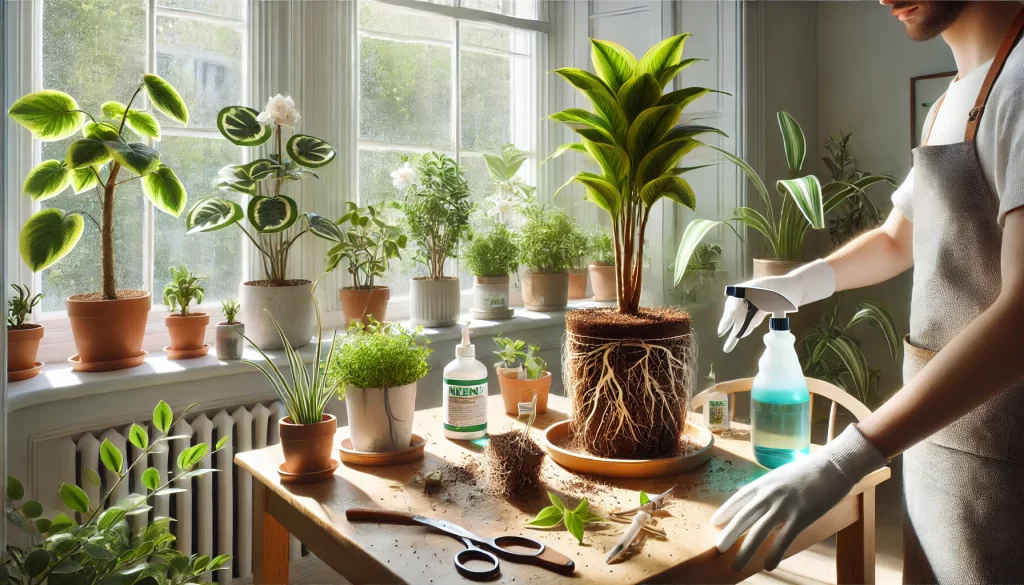
- Remove the plant from the pot and gently shake off the wet soil.
- Trim away all mushy, brown, or black roots with sterilized scissors.
- Soak healthy roots briefly in diluted hydrogen peroxide (1 part peroxide to 4 parts water).
- Repot using fresh, dry soil in a clean container with proper drainage.
🛠️ Powdery Mildew
- Remove and dispose of infected leaves.
- Improve air movement and light exposure.
- Spray the remaining leaves with neem oil or a baking soda solution (1 tsp baking soda + 1 drop dish soap + 1 liter of water).
🛠️ Leaf Spot
- Trim affected foliage.
- Spray with a copper-based fungicide, following label instructions.
- Avoid misting leaves during recovery.
🛠️ Bacterial Soft Rot
- Cut away infected parts of the plant.
- Let the plant dry out slightly and reduce humidity.
- Disinfect the container before repotting.
🛠️ Viral Infections
⚠️ There is no cure.
- Remove and destroy infected plants immediately.
- Disinfect everything they came in contact with to stop the spread.
Safe & Natural Home Remedies
- ✅ Neem Oil: A natural antifungal and insect repellent. Safe when used weekly as a preventive spray.
- ✅ Cinnamon Powder: Lightly sprinkled over soil helps prevent fungal growth in seedlings.
- ✅ Hydrogen Peroxide: Treats root rot when diluted. Helps oxygenate compacted soil.
- ✅ Milk Spray: Mix 1 part milk to 9 parts water to fight powdery mildew naturally.
When to Seek Expert Help
📌 Sometimes DIY remedies aren’t enough. You may need professional guidance if:
- The disease spreads across multiple plants quickly
- Symptoms recur after treatment
- You suspect a virus is involved
Look for local resources like:
- University of Florida IFAS Plant Clinics
- RHS Advisory Services (UK)
- Master Gardener programs in your region
Conclusion
Caring for indoor plants means more than just sunlight and water. By paying attention to symptoms, avoiding risky practices, and acting quickly when disease appears, you can keep your houseplants strong and vibrant.
✅ Remember: indoor plant diseases are preventable with consistent, mindful care.
Found this article helpful? Share it with a fellow plant lover!
FAQs
❓ What are the first signs of a sick houseplant?
Yellowing leaves, brown spots, or stunted growth are common early signs. Always inspect the roots if you’re unsure.
❓ Can I treat indoor plant diseases naturally?
Yes! Neem oil, hydrogen peroxide, milk spray, and cinnamon are all effective, affordable, and safe options.
❓ How do I know if it’s a virus or fungus?
Viral infections often cause mosaic patterns or leaf distortion. Fungi usually show visible mold or soft spots.
❓ Should I repot a sick plant?
Often, yes. Especially if the disease is in the roots or soil. Use fresh, sterile potting mix and a clean pot.
❓ Is it safe to reuse soil after treating a disease?
No. It’s best to discard old soil to avoid recontamination.
About the Author
Emily Parker is an indoor gardening specialist passionate about helping people grow happier, healthier houseplants. With over a decade of experience in plant care and interior greenery, she shares practical, science-backed advice to empower plant lovers of all levels.
Disclaimer
This article is for informational purposes only and does not replace advice from professional horticulturists or certified plant pathologists.

Critical Observator offers expert tips and guides to make indoor plant care easy, enjoyable, and accessible.