
Published on March 24, 2025
by Emily Parker, indoor gardening specialist
No matter how carefully you care for your houseplants, pests often find a way to sneak in. From spider mites to fungus gnats, indoor plant pests are more common than most plant owners expect—and if left unchecked, they can cause real damage to even the healthiest specimens.
In this complete guide, you’ll learn how to identify, prevent, and treat common indoor plant pests using proven, safe, and effective methods. We’ll cover natural remedies, prevention strategies, and signs of infestations so you can keep your indoor garden healthy and thriving all year long.
Understanding Indoor Plant Pests
What Are Indoor Plant Pests?
📌 Indoor plant pests are tiny insects or arachnids that live on or near your plants, feeding on their foliage, sap, or roots. Most are too small to notice until damage has already begun.
These invaders often arrive through contaminated soil, new plants, or even open windows. Some are harmless in small numbers, but if populations grow unchecked, they can lead to yellowing leaves, drooping stems, sticky residue, and stunted growth.
Why Indoor Plants Are Vulnerable
✅ Indoor environments often lack natural predators that control pests outdoors
✅ High humidity and stagnant air create ideal conditions for infestation
✅ Overcrowding or poor plant hygiene accelerates spread
Common Indoor Plant Pests and Their Symptoms
🐛 1. Spider Mites
- Size: Tiny, nearly invisible
- Symptoms: Fine webbing between leaves, speckled yellow spots
- Thrive in: Warm, dry conditions
🦠 2. Mealybugs
- Size: Small, white, cotton-like insects
- Symptoms: Sticky residue (honeydew), leaf drop
- Often hide in leaf joints or under leaves
🐜 3. Aphids
- Size: Small green, black, or white insects
- Symptoms: Curled or distorted leaves, sticky sap
- Multiply rapidly on tender new growth
🪲 4. Fungus Gnats
- Size: Tiny black flies hovering near soil
- Symptoms: Wilting, root damage in seedlings
- Larvae feed on roots in moist soil
🐞 5. Scale Insects
- Size: Oval, brown bumps stuck to stems or leaves
- Symptoms: Yellowing, leaf drop, sticky sap
- Hard to detect due to their armor-like shells
📌 Each pest requires a slightly different approach for removal and control.
What Causes Indoor Pest Infestations?
✅ Overwatering
Moist soil attracts fungus gnats and encourages eggs to hatch.
✅ Poor Air Circulation
Still air allows populations to multiply undisturbed.
✅ Bringing New Plants Indoors Without Quarantine
Many pests ride in undetected on new plants or pots.
✅ Using Outdoor Soil Indoors
Garden soil can introduce larvae, eggs, or mites.
✅ Lack of Regular Inspection
Without regular checks, pests can grow from invisible to overwhelming in days.
How to Prevent Indoor Plant Pests
Prevention is always easier (and cheaper) than treatment. Here’s what to do:
📌 1. Quarantine New Plants
Keep new plants isolated for 10–14 days. Watch for pests, unusual spots, or sticky leaves.
📌 2. Clean Leaves Regularly
Dusty foliage attracts mites. Wipe leaves with a damp cloth weekly and inspect undersides.
📌 3. Avoid Overwatering
Allow the top inch of soil to dry before watering. Use pots with drainage holes.
📌 4. Improve Ventilation
Use fans or open windows to keep air moving. Plants spaced out fare better than crowded corners.
📌 5. Keep Soil Surface Clean
Remove fallen leaves or debris to prevent pest eggs and fungal growth.
How to Get Rid of Indoor Plant Pests (Safely)
🛠️ Step-by-Step General Treatment Plan
- Isolate the infested plant immediately
- Manually remove pests with a cloth, cotton swab, or toothbrush
- Spray with natural remedies (see below)
- Repeat every few days until infestation is gone
- Inspect nearby plants and treat if necessary
🧪 Best Natural Remedies
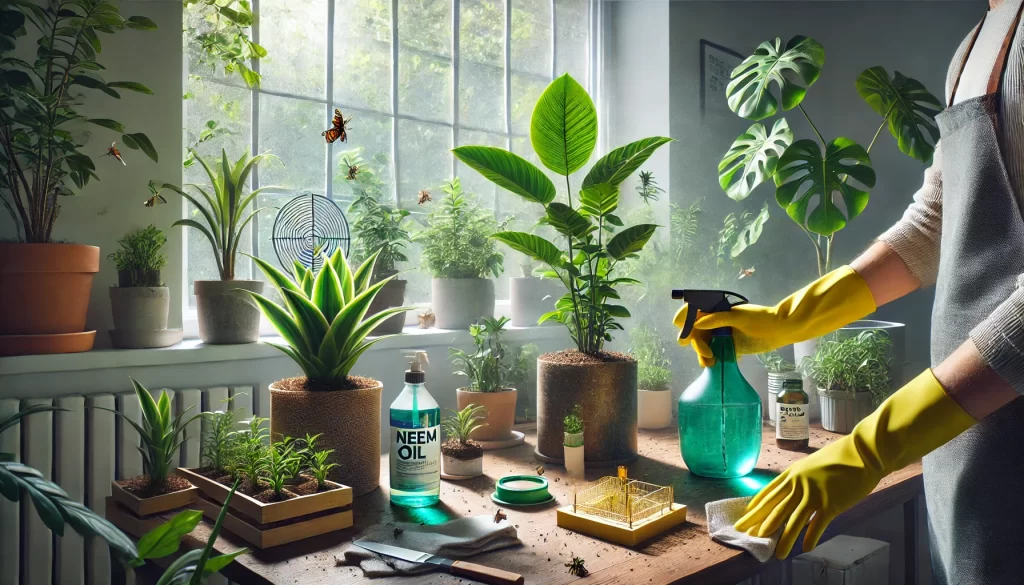
- ✅ Neem Oil Spray: Mix 1 tsp neem oil + 1 tsp mild soap + 1 liter of water. Safe and effective against all major pests.
- ✅ Rubbing Alcohol: Dab mealybugs or scale with a cotton swab soaked in alcohol.
- ✅ Hydrogen Peroxide Drench: 1 part 3% peroxide to 4 parts water; pour into soil to kill fungus gnat larvae.
- ✅ Sticky Traps: Use yellow traps near soil to monitor and reduce flying insects.
📌 For severe cases, use insecticidal soap or horticultural oil—always follow label instructions.
When to Use Chemical Treatments (With Caution)
While natural remedies work in most cases, severe infestations may require stronger solutions.
⚠️ Only use pesticides marked safe for indoor plants. Apply in a well-ventilated space, away from children and pets. Follow directions exactly, and avoid overuse.
Long-Term Pest Management Tips
- ✅ Check all plants weekly for early signs of pests
- ✅ Keep leaves dust-free
- ✅ Water appropriately (neither too much nor too little)
- ✅ Use sterile tools and pots
- ✅ Don’t reuse contaminated soil
Conclusion
Pests are a part of plant life—but they don’t have to take over your home. By learning how to recognize and respond to signs of infestation early, and by taking proactive care measures, you’ll be able to enjoy a lush, vibrant, and pest-free indoor jungle.
✅ Remember: a healthy plant is the best defense against pests.
If this article helped you, consider sharing it with fellow plant lovers.
FAQs
❓ How can I tell if my plant has pests?
Look for sticky residue, discolored leaves, webbing, or tiny moving insects on leaves or soil.
❓ Are natural remedies safe for all plants?
Most are, especially neem oil and hydrogen peroxide (diluted). Always spot-test sensitive plants first.
❓ How often should I spray neem oil?
Once every 7–10 days until pests are gone. Don’t apply in direct sunlight.
❓ What if I see gnats but no damage?
Adult fungus gnats are mostly harmless, but larvae eat roots. Treat the soil to prevent root damage.
❓ Can pests spread from one plant to another?
Yes! That’s why isolation and quick response are key.

Critical Observator offers expert tips and guides to make indoor plant care easy, enjoyable, and accessible.