
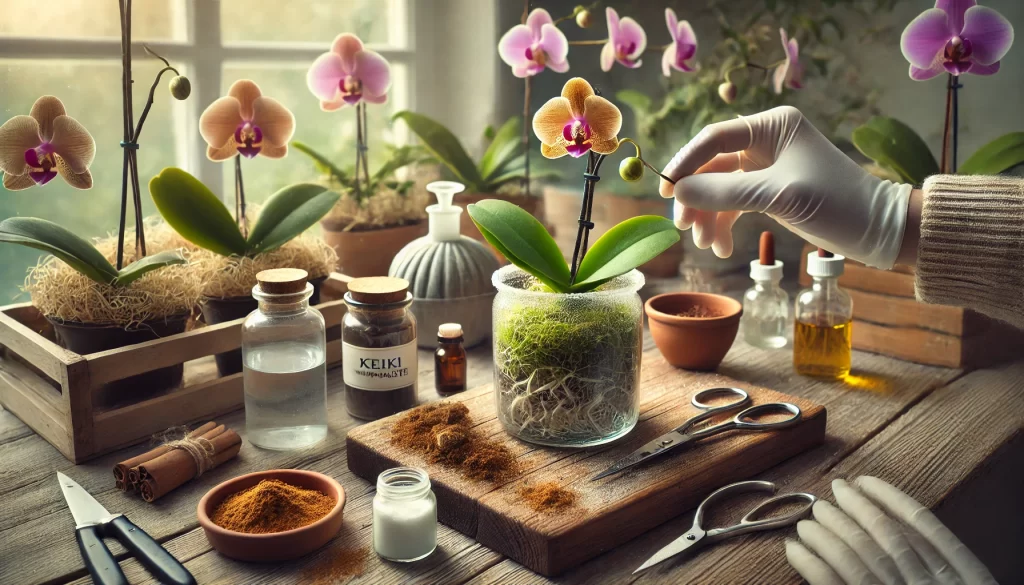
Propagating orchids at home might sound intimidating, but with the right approach, it’s not only possible—it’s incredibly rewarding. Whether you want to expand your orchid collection or rescue a dying plant, propagation offers a sustainable, cost-effective way to grow new blooms from the ones you already love.
In this guide, you’ll learn how to propagate orchids step by step, including the tools you’ll need, the best techniques for each orchid type, and tips to boost your success as a beginner.
✅ Why Propagate Orchids at Home?
Propagating orchids offers several benefits—especially for hobbyists and collectors:
- 🌿 Saves money: You can grow more plants without buying new ones.
- 🌸 Preserves rare species: A great way to maintain a beautiful bloom you love.
- 🧪 Fun and educational: A hands-on way to learn more about plant biology.
- ♻️ Sustainable gardening: Avoids waste and encourages mindful growing.
Not all orchids are propagated the same way, but once you know the technique for your species, the process becomes much simpler.
📌 The Main Methods of Orchid Propagation
Each orchid type has its own way of multiplying. Here are the most common and beginner-friendly methods:
1. Keiki (Baby Plant) Propagation 👶🌱
Best for: Phalaenopsis, Dendrobium
Keikis are small plantlets that grow naturally on orchid flower spikes or canes. They have their own leaves and roots and can be removed to grow as new plants.
✅ How to propagate using keikis:
- Wait until the keiki has 2–3 leaves and at least 2 inches of roots.
- Cut the spike or cane about 1 inch above and below the keiki using sterilized scissors.
- Let the keiki dry for a few hours.
- Pot it in a small orchid container with fine bark or sphagnum moss.
- Mist lightly and place in bright, indirect light.
💡 Tip: You can encourage keiki growth with a cytokinin paste (keiki paste).
2. Division of Pseudobulbs ✂️
Best for: Cattleya, Oncidium, Dendrobium
These orchids grow from thick, bulb-like structures called pseudobulbs. Mature plants can be divided to produce new, fully-grown orchids.
✅ Steps to propagate via division:
- Remove the orchid from its pot and gently shake off old media.
- Use a sterile knife to divide the plant into sections, each with at least 3–4 pseudobulbs.
- Dust the cuts with cinnamon powder or fungicide.
- Repot each division in fresh mix and water lightly.
⚠️ Avoid dividing orchids that are too young or stressed.
3. Backbulb Propagation 🧪
Best for: Older sympodial orchids like Cattleya or Oncidium
Backbulbs are older pseudobulbs that no longer produce leaves or flowers, but still store energy.
✅ How to propagate with backbulbs:
- Separate healthy backbulbs during repotting.
- Place them in damp sphagnum moss in a small container or bag.
- Keep in a warm, shaded area with high humidity.
- Wait for new shoots or growth eyes to emerge (can take weeks to months).
Once new growth appears, pot the backbulb like a regular plant.
4. Stem Cutting (Advanced Method) 🌿
Best for: Dendrobiums with long canes
✅ Propagation steps:
- Cut a healthy cane into sections with at least one node each.
- Lay the cuttings horizontally on moist sphagnum moss in a tray.
- Cover with plastic wrap to maintain humidity.
- Place in a warm, indirect light environment.
Roots and shoots will form over time. Once they grow, you can plant them in pots.
🧰 What You’ll Need to Propagate Orchids
Here’s a quick checklist before starting:
✅ Sharp, sterilized scissors or knife
✅ Orchid potting mix (bark or moss depending on method)
✅ Small pots or trays with drainage
✅ Rooting hormone or keiki paste (optional)
✅ Spray bottle with clean water
✅ Cinnamon or fungicide powder
📦 Keep all tools clean to avoid introducing bacteria or fungus.
🌿 Aftercare: Helping Your Propagated Orchid Thrive
Propagation is just the beginning. Here’s how to care for your new orchid:
✅ Keep humidity high (50–70%)
✅ Avoid direct sunlight while roots develop
✅ Water lightly—overwatering can rot young roots
✅ Don’t fertilize until the orchid shows active new growth
✅ Be patient—root systems and leaves take time to establish
❓FAQs
How long does it take for a propagated orchid to bloom?
It can take 1–3 years, depending on the species and growing conditions.
Can I propagate any orchid using keikis?
No, keikis are natural to Phalaenopsis and Dendrobium. Other species don’t produce them.
Should I use rooting hormone for orchids?
It’s not necessary, but keiki paste or rooting hormone can increase success rates.
Why did my keiki die after potting?
It may have been separated too early. Always wait for well-developed roots.
Can I grow an orchid from a leaf or flower?
No. Unlike succulents, orchid leaves and flowers don’t propagate. Use stems, keikis, or bulbs.

Critical Observator offers expert tips and guides to make indoor plant care easy, enjoyable, and accessible.