
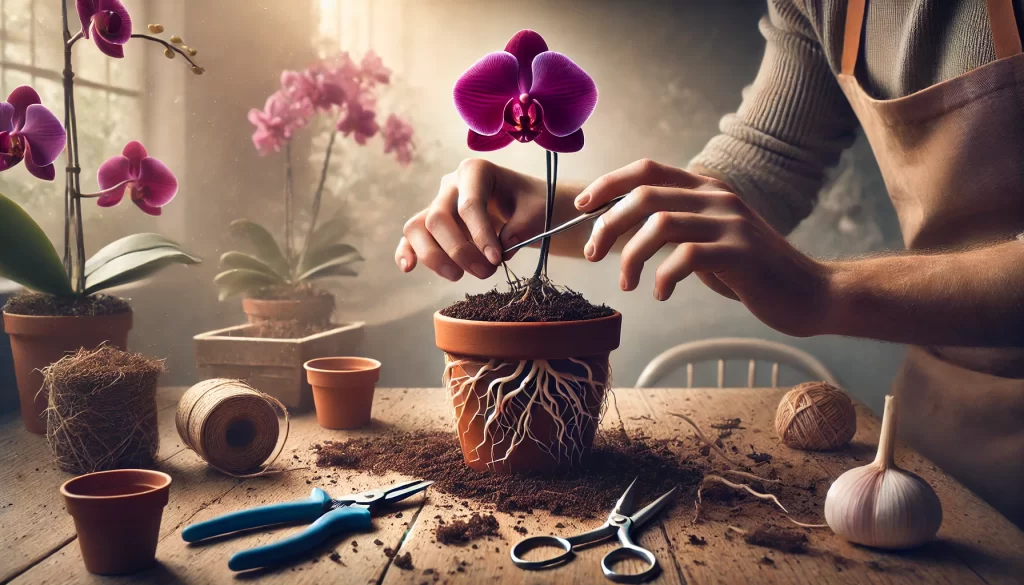
Repotting is a crucial part of orchid care, ensuring the plant has fresh nutrients, proper drainage, and enough space to grow. Over time, the potting mix breaks down, retaining too much moisture and suffocating the roots. If your orchid is outgrowing its pot or showing signs of distress, it’s time for a repot!
In this guide, you’ll learn how to repot an orchid correctly, when to do it, and the best materials to use for a thriving plant.
When Should You Repot an Orchid?
Unlike many houseplants, orchids don’t need frequent repotting. However, they must be repotted every 1-2 years to maintain root health.
🚨 Signs Your Orchid Needs Repotting:
✅ The potting mix looks decomposed, compacted, or moldy
✅ Roots are growing out of the drainage holes or over the pot
✅ Water drains too slowly or pools at the bottom of the pot
✅ The orchid was recently bought and is in a poor-quality medium
✅ Leaves are wrinkling despite proper watering
🚫 When NOT to Repot:
❌ When your orchid is blooming (this can cause flower loss)
❌ If the plant is stressed from recent changes in environment
Best Potting Mix and Pot for Repotting
Choosing the Right Potting Mix
Orchids need a well-draining mix that allows airflow to the roots. The best mix depends on the orchid type:
🌿 Phalaenopsis (Moth Orchid): Pine bark + sphagnum moss
🌺 Cattleya: Large bark + perlite + charcoal
🌸 Dendrobium: Coconut husk + charcoal + perlite
🌳 Oncidium: Fine bark + sphagnum moss
💜 Vanda: Bare root or LECA (semi-hydroponic)
Choosing the Right Pot
✅ Clear Plastic Pots – Allow you to monitor root health and moisture levels
✅ Clay Pots – Provide breathability but dry out faster
✅ Orchid Baskets – Great for Vanda orchids that need air circulation
✅ Pots with Drainage Holes – Essential for preventing root rot
🚨 Avoid deep pots that trap moisture and compact the roots.
Step-by-Step Guide to Repotting an Orchid
1️⃣ Prepare Materials
Gather a new pot, fresh potting mix, sterilized scissors, and a stake (if needed). Soak the potting mix in water for 30 minutes to ensure it retains proper moisture.
2️⃣ Remove the Orchid from Its Old Pot
Gently squeeze the sides of the pot to loosen the roots. Carefully lift the orchid out, shaking off excess potting mix.
3️⃣ Trim Damaged Roots
Use sterilized scissors to cut away any black, mushy, or dead roots. Healthy roots should be firm and green or white.
4️⃣ Position the Orchid in the New Pot
Hold the orchid in the center of the new pot. Spread the roots out evenly before adding fresh potting mix.
5️⃣ Fill with Fresh Potting Mix
Gently add the potting mix around the roots, ensuring they have space to breathe. Do not press the mix too tightly.
6️⃣ Secure the Orchid (if necessary)
If your orchid is top-heavy, use a stake to support it until new roots grow.
7️⃣ Water Lightly
After repotting, mist the roots lightly but avoid soaking them. Wait about a week before resuming regular watering to let the plant adjust.
Post-Repotting Care Tips
🌱 Place the orchid in bright, indirect light to help it recover.
💧 Avoid fertilizing for the first two weeks after repotting.
🔄 Monitor moisture levels carefully—the new mix may retain water differently.
Repotting may cause slight stress, but within a few weeks, your orchid will adapt and continue growing healthier than before!
Conclusion: Keep Your Orchid Thriving with Proper Repotting
Repotting orchids ensures they have the space, nutrients, and aeration needed for long-term health and stunning blooms. By choosing the right potting mix and following a careful process, you’ll give your orchid the best chance to flourish.
🌿 When was the last time you repotted your orchid? Share your experience in the comments!

Critical Observator offers expert tips and guides to make indoor plant care easy, enjoyable, and accessible.