
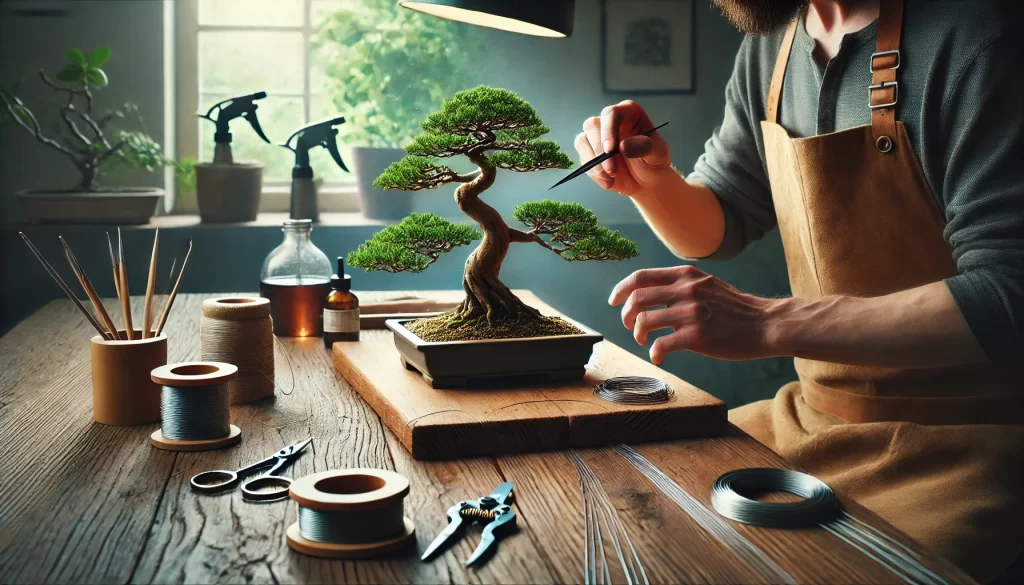
Styling a bonsai tree is where horticulture meets artistry. Beyond watering, pruning, or repotting, it’s the styling that transforms a small tree into a living sculpture. Knowing how to style a bonsai tree properly means learning to guide its shape, flow, and personality over time, honoring both nature and aesthetics.
This complete guide walks you through traditional techniques, modern adaptations, and creative philosophies behind bonsai styling—giving you the tools and vision to create a tree that tells its own unique story.
🌿 What Styling Really Means in Bonsai
Styling in bonsai refers to the deliberate shaping of the tree’s trunk, branches, and foliage to reflect a natural, artistic, or symbolic form. This process doesn’t happen in a day—it evolves over years.
✅ It’s about direction, not domination
✅ It’s a collaboration between artist and tree
✅ It aims for balance, asymmetry, and expression
Every branch you move or remove should serve a purpose.
🎨 Classic Bonsai Styles (and What They Represent)
There are several traditional bonsai styles, each inspired by trees in nature and standardized over centuries.
1. Formal Upright (Chokkan)
- Straight trunk, symmetrical branch placement
- Represents strength and order
2. Informal Upright (Moyogi)
- Curved trunk, natural asymmetry
- Suggests flexibility and grace
3. Slanting (Shakan)
- Tree leans dramatically to one side
- Symbolizes resilience in harsh winds
4. Cascade (Kengai)
- Branches drop below the pot
- Mimics trees on cliffs or riverbanks
5. Semi-Cascade (Han-Kengai)
- One primary branch dips below the rim
- Evokes natural decline without full fall
6. Literati (Bunjingi)
- Minimal foliage, tall slender trunk
- Emphasizes elegance and emptiness
7. Windswept (Fukinagashi)
- All branches flow in one direction
- Captures the power of nature’s forces
🧠 Tip: Use style as a starting point, not a rulebook. Bonsai is about expression, not imitation.
✂️ Essential Styling Techniques
Learning how to style a bonsai tree requires mastering a few core methods. Each plays a role in shaping the tree’s form and character.
📌 Pruning
- Purpose: Defines structure and silhouette
- How: Cut with sharp shears or scissors; remove unwanted shoots, inward branches, or crossing limbs
- When: Structural pruning in spring; maintenance pruning year-round
📌 Wiring
- Purpose: Moves and holds branches in desired positions
- How: Wrap aluminum or copper wire around branches and gently bend into place
- When: During active growth; remove before wire bites into bark
⚠️ Always monitor wired branches—adjust or remove wires every few weeks.
📌 Clip and Grow
- Purpose: Uses repeated pruning to gradually create structure without wire
- Best for: Slow-growing species or when minimal stress is desired
- How: Cut back strong growth, allow new shoots, and shape naturally over time
📏 Guidelines for Tree Proportions
Great bonsai styling isn’t just about what looks good—it’s rooted in proportion and balance.
- The first branch should emerge at 1/3 of the tree’s height
- The apex (top) should slightly lean toward the viewer
- Branches alternate left-right-back in natural rhythm
- The front of the tree should clearly show movement and depth
✅ Avoid straight lines
✅ Aim for a balanced silhouette
✅ Let light penetrate the canopy
🪴 Choosing the Front and Apex
Styling begins with selecting the front of the tree. This is the angle you’ll design the tree to be viewed from.
To find the best front:
- Look for the most dynamic trunk line
- Avoid visible scars
- Choose a view with balanced root flare and taper
Apex (tree top):
- Should follow the flow of the trunk
- Can be straight, curved, or even absent (in literati)
🧠 Styling Philosophies: Artistic, Natural, or Personal?
There’s no single “correct” bonsai style. There are three major schools of thought:
🌳 Traditional Japanese Styling
- Follows strict style rules (Chokkan, Moyogi, etc.)
- Focuses on symbolism, elegance, and refinement
🌲 Naturalistic Bonsai (Modern European Influence)
- Mimics trees in nature without regard for traditional styles
- More irregular and organic
✨ Personal Expression
- Blends inspiration, experience, and intuition
- May break rules to tell a story or emotion
🌱 Remember: Your bonsai is not just a tree—it’s your art.
⚠️ Common Styling Mistakes (and How to Avoid Them)
Even experienced bonsai artists make missteps. Avoid these frequent pitfalls:
🚫 Over-wiring – Leads to scarring or stress
🚫 Over-pruning – Weakens the tree, reducing vigor
🚫 Forcing a style – Not every tree suits every shape
🚫 Ignoring front/back design – Leads to flat or awkward trees
✅ Always style gradually. Let the tree guide you.
📅 Styling Over Time: Patience is Key
Styling a bonsai is a long-term process. A rushed design often results in a stressed tree or poor shape.
Year 1: Basic structure, light wiring
Year 2–3: Refine branches, improve taper
Year 4+: Develop fine ramification (branch density)
📌 Styling is ongoing—adjustments happen every season.
❓ FAQs About Styling a Bonsai Tree
Can any tree be styled into bonsai?
Most woody species can be styled if they have small leaves, good branching, and respond well to pruning.
Do I need to wire every bonsai?
No. Some bonsai are styled entirely with the clip-and-grow method.
What is the easiest style for beginners?
Informal upright (Moyogi) is forgiving, natural-looking, and easy to maintain.
How long does it take to style a bonsai?
Initial styling can take a few hours, but full development takes years, sometimes decades.
What if I make a styling mistake?
Don’t worry! Trees are forgiving. Let it recover, reassess, and try again.

Critical Observator offers expert tips and guides to make indoor plant care easy, enjoyable, and accessible.