
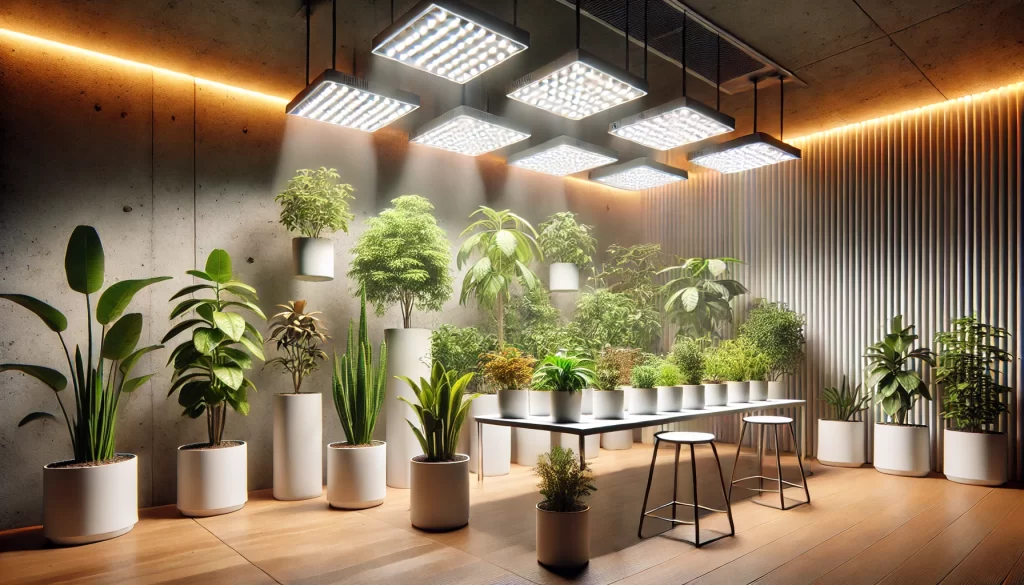
Indoor gardening can be challenging, especially in homes with limited natural sunlight. Grow lights offer a powerful solution by simulating sunlight, allowing plants to thrive year-round. Whether you’re growing succulents, herbs, or tropical houseplants, using the right grow lights can dramatically improve their health, growth, and flowering potential.
This guide will explore the benefits of using grow lights, how they work, and how to choose the best one for your indoor plants.
1. Why Use Grow Lights for Indoor Plants?
Grow lights mimic natural sunlight, providing the necessary light spectrum for photosynthesis and plant growth. They help plants that struggle in low-light environments by ensuring they receive the energy needed to develop properly.
✔ Boosts Plant Growth – Provides consistent light for faster and healthier growth.
✔ Allows Year-Round Gardening – Essential for winter or low-light homes.
✔ Enhances Flowering & Fruit Production – Encourages better blooms and fruiting.
✔ Reduces Leggy Growth – Prevents plants from becoming weak and stretched.
✔ Supports Seed Starting – Helps seedlings develop strong roots indoors.
2. How Do Grow Lights Work?
Grow lights emit specific wavelengths of light that plants need for photosynthesis. Different light colors affect plant development in unique ways:
🌱 Blue Light (400–500 nm)
✅ Encourages leaf and stem growth.
✅ Essential for seedlings and foliage plants.
🌸 Red Light (600–700 nm)
✅ Stimulates flowering and fruit production.
✅ Helps tomatoes, peppers, and flowering houseplants bloom.
☀ Full-Spectrum Light (400–700 nm)
✅ Mimics natural daylight, covering all plant needs.
✅ Best for general plant growth and indoor gardens.
3. Best Types of Grow Lights for Indoor Plants
Not all grow lights are the same. Here’s a breakdown of the most effective types.
💡 LED Grow Lights (Best Overall Choice)
✔ Energy-efficient and long-lasting.
✔ Produces full-spectrum light for all plant stages.
✔ Generates less heat, preventing plant damage.
💡 Fluorescent Grow Lights (Best for Beginners)
✔ Common types: T5, T8, and CFL bulbs.
✔ Great for herbs, seedlings, and leafy greens.
✔ Less intense than LED but more affordable.
💡 High-Intensity Discharge (HID) Lights (Best for Large Gardens)
✔ Extremely powerful, used in greenhouses and hydroponics.
✔ Includes Metal Halide (MH) for vegetative growth and High-Pressure Sodium (HPS) for flowering.
✔ Consumes more energy but produces high-intensity light.
📌 Tip: For most home gardeners, LED full-spectrum grow lights are the best balance of efficiency, effectiveness, and affordability.
4. How to Choose the Right Grow Light for Your Plants
The best grow light depends on your plant type and space.
| Plant Type | Recommended Grow Light | Light Duration |
|---|---|---|
| Leafy Greens (Lettuce, Spinach) | LED or Fluorescent | 12–16 hours/day |
| Herbs (Basil, Mint) | Full-Spectrum LED | 10–14 hours/day |
| Flowering Plants (Orchids, African Violets) | Red & Blue LED | 12–16 hours/day |
| Succulents & Cacti | LED with High Intensity | 10–12 hours/day |
| Seedlings & Propagation | T5 Fluorescent or LED | 14–18 hours/day |
📌 Tip: Use a timer to automate light cycles and prevent overexposure.
5. Common Mistakes When Using Grow Lights
| Mistake | Problem | Solution |
|---|---|---|
| Placing lights too far away | Plants become weak and leggy | Keep 6–12 inches from plants |
| Using the wrong spectrum | Can stunt growth or flowering | Choose full-spectrum LED lights |
| Overexposing plants | Can cause leaf burn and stress | Stick to recommended hours per day |
| Ignoring heat output | Some lights dry out soil quickly | Monitor temperature and humidity levels |
6. How to Set Up a Grow Light System at Home
📌 Step-by-Step Guide
1️⃣ Choose a Suitable Grow Light – Pick one that matches your plant’s needs.
2️⃣ Adjust Light Distance – Position 6–12 inches above plants.
3️⃣ Use a Timer – Set lights for 10–16 hours per day.
4️⃣ Monitor Plant Growth – Adjust intensity if plants look weak or burned.
5️⃣ Ensure Proper Ventilation – Prevents overheating and humidity buildup.
7. Are Grow Lights Worth It?
✔ If your home has limited sunlight, grow lights ensure your plants get the light they need.
✔ For winter gardening, artificial lighting prevents dormancy and keeps plants thriving.
✔ For indoor vegetable and herb gardens, grow lights increase yields and improve plant health.
For any plant enthusiast, investing in grow lights is a game-changer, allowing you to grow a variety of plants anytime, anywhere!
Final Thoughts
Using grow lights for indoor plants is an effective way to maintain healthy, vibrant plants all year. By choosing the right type of light, adjusting placement, and controlling exposure, you can maximize plant growth, encourage blooming, and create an optimal indoor garden.
With the right grow light setup, your plants will thrive regardless of natural sunlight availability!

Critical Observator offers expert tips and guides to make indoor plant care easy, enjoyable, and accessible.