
Published on March 18, 2025
by Emily Parker, indoor gardening specialist
Orchids are among the most beloved houseplants due to their exotic beauty and long-lasting blooms. However, their unique structure and sensitivity also make them vulnerable to various diseases. Early detection and proper care are crucial for maintaining a thriving plant.
In this comprehensive guide, you’ll learn how to identify and treat common orchid diseases with accuracy and confidence. From spotting early symptoms to applying natural and chemical treatments, you’ll gain the knowledge needed to keep your orchids healthy, beautiful, and blooming.
Why Orchids Are Prone to Disease
Orchids, especially popular species like Phalaenopsis, Cattleya, and Dendrobium, thrive in humid, warm environments. While these conditions support their growth, they also create the perfect breeding ground for fungi, bacteria, and pests.
⚠️ Unlike many houseplants, orchids don’t always show clear signs of illness early on. What looks like a harmless blemish could rapidly evolve into a fatal infection if ignored.
📌 The Most Common Orchid Diseases and How to Identify Them
Understanding the symptoms is the first step toward effective treatment. Let’s explore the diseases that most commonly affect orchids.
1. Root Rot 💧
✅ Cause: Overwatering and poor drainage
✅ Symptoms:
- Mushy, black or brown roots
- Yellowing, limp leaves
- Foul smell from the pot
✅ Treatment: - Remove the orchid from its pot
- Trim all rotten roots using sterilized scissors
- Repot with fresh, bark-based mix in a pot with proper drainage
2. Bacterial Soft Spot (Erwinia spp.) 🦠
✅ Cause: High humidity and stagnant air
✅ Symptoms:
- Soft, watery patches on leaves
- Unpleasant odor
- Rapid spread across the plant
✅ Treatment: - Isolate the infected orchid immediately
- Remove infected tissue with a sterile blade
- Apply a bactericide or hydrogen peroxide (3%) to wounds
- Improve air circulation around the plant
3. Fungal Leaf Spot (Phyllosticta, Colletotrichum) 🍂
✅ Cause: Poor ventilation, water on leaves
✅ Symptoms:
- Tiny black or brown spots
- Spots may have yellow halos
- Slow but progressive spread
✅ Treatment: - Remove infected leaves
- Use a fungicide like copper sulfate
- Avoid wetting leaves during watering
- Increase airflow and reduce humidity slightly
4. Botrytis (Gray Mold) 🌫️
✅ Cause: Cool, humid conditions and old blooms
✅ Symptoms:
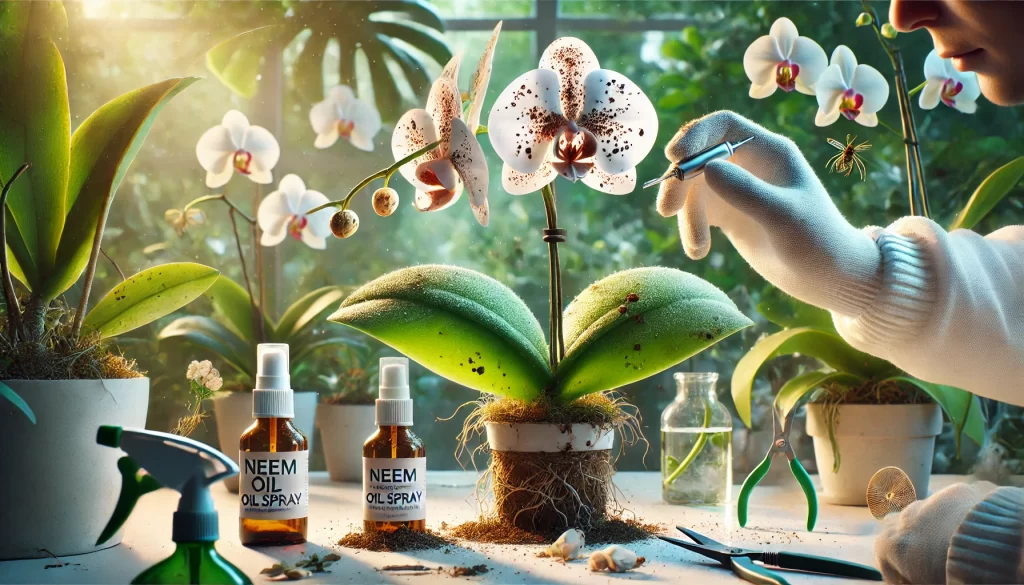
- Small brown dots on flower petals
- Gray fuzzy mold appearing later
✅ Treatment: - Remove infected flowers and petals
- Apply a sulfur-based fungicide
- Keep flowers dry and ventilated
5. Black Rot (Pythium and Phytophthora) ⚫
✅ Cause: Excessive moisture and poor drainage
✅ Symptoms:
- Rapidly expanding black lesions on leaves and pseudobulbs
- Tissue collapses with a soggy texture
✅ Treatment: - Cut away all affected tissue
- Soak remaining plant in fungicide solution
- Repot with dry, sterile media
- Reduce humidity and improve light exposure
📌 Secondary Infections and Conditions to Watch For
Diseases don’t always act alone—sometimes, a stressed orchid becomes more vulnerable to other problems.
Pest Infestations 🐜
- Scale, spider mites, and mealybugs often follow fungal or bacterial infections.
- Treat with neem oil, insecticidal soap, or manual removal using alcohol-dipped cotton swabs.
Sunburn or Cold Damage 🌞❄️
- Can mimic fungal or bacterial spots
- Spots appear quickly after temperature or light shock
- Adjust location rather than using chemical treatments
🛠️ How to Prevent Orchid Diseases
Preventive care is always better than cure. Here’s how to protect your orchid from infection:
✅ Water smartly: Only when roots are silvery and the medium is dry
✅ Use clean tools: Sterilize scissors and pots before use
✅ Improve airflow: Place a small fan nearby or space plants out
✅ Monitor humidity: Keep it between 50–70%
✅ Avoid standing water: In pots, trays, or the orchid crown
🌿 Natural Treatments for Early-Stage Orchid Diseases
Sometimes, natural methods can stop a disease before it spreads.
🍋 Lemon Juice or Vinegar Spray
- Mildly acidic
- Deters fungal spores on leaves
- Use with caution on sensitive orchids
🧂 Cinnamon Powder
- Natural antifungal
- Sprinkle on wounds after cutting infected tissue
💧 Hydrogen Peroxide (3%)
- Kills bacteria and fungi on contact
- Use with a cotton pad on affected areas
🌱 Neem Oil
- Prevents both pests and fungal growth
- Use regularly during high-humidity seasons
💊 When to Use Chemical Treatments
If natural remedies aren’t working or the infection spreads rapidly, it’s time for targeted fungicides or bactericides.
📌 Choose the right product:
- Copper fungicide: For leaf spots
- Sulfur fungicide: For molds like botrytis
- Systemic fungicides: For internal root diseases
⚠️ Always follow product instructions. Overuse may harm the plant.
FAQs: Orchid Disease Care
1. Can I save an orchid with no healthy roots left?
You can try! Place it in a humidity dome with moist sphagnum moss and wait for new roots to grow—this is called a recovery setup.
2. Should I cut off infected orchid leaves or wait?
If the infection is spreading, cut it off immediately. Always use sterile tools.
3. How do I know if my orchid has a disease or is just aging?
Older leaves naturally yellow and fall. Diseases usually spread quickly, appear blotchy, and sometimes smell.
4. Can I use hydrogen peroxide on orchids regularly?
Only occasionally. Frequent use can dry out roots. Use as a spot treatment.
5. What’s the fastest way to stop an orchid disease?
Immediate isolation, removal of affected tissue, and application of appropriate treatment (fungicide or bactericide).

Critical Observator offers expert tips and guides to make indoor plant care easy, enjoyable, and accessible.