
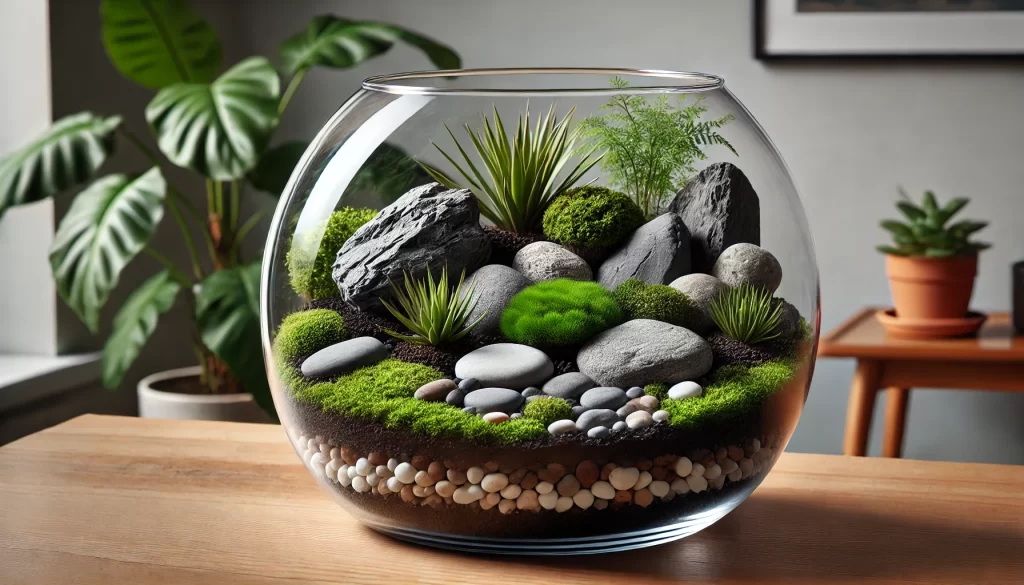
An indoor terrarium is a self-sustaining miniature garden enclosed in glass, creating a low-maintenance and visually stunning way to bring nature indoors. Whether you want a lush, tropical landscape or a desert-inspired succulent display, a terrarium is a perfect way to showcase plants in a compact and stylish environment.
This guide will teach you how to set up an indoor terrarium, covering the best plants to use, step-by-step assembly, and essential care tips to keep your mini garden thriving.
1. What Is a Terrarium?
A terrarium is a glass container that houses plants, creating a mini ecosystem that requires minimal watering and care. There are two main types:
✔ Closed Terrariums – Have a lid to retain moisture, creating a humid environment perfect for tropical plants.
✔ Open Terrariums – Allow airflow and are best for succulents, cacti, and other low-humidity plants.
2. Best Plants for an Indoor Terrarium
Choosing the right plants is crucial to creating a balanced and sustainable terrarium.
🌿 Best Plants for a Closed Terrarium (High Humidity)
✅ Ferns (Nephrolepis exaltata) – Thrive in moist, humid conditions.
✅ Moss (Bryophyta spp.) – Perfect for a soft, green carpet effect.
✅ Fittonia (Fittonia albivenis) – A colorful plant that loves humidity.
✅ Baby’s Tears (Soleirolia soleirolii) – Creates dense ground cover.
🌵 Best Plants for an Open Terrarium (Low Humidity)
🌱 Succulents (Echeveria, Haworthia) – Store water in their leaves, ideal for dry environments.
🌱 Cacti (Mammillaria, Opuntia) – Require good airflow and minimal moisture.
🌱 Air Plants (Tillandsia spp.) – Do not need soil and absorb moisture from the air.
🌱 Jade Plant (Crassula ovata) – Drought-resistant and visually appealing.
📌 Tip: Never mix high-humidity and low-humidity plants in the same terrarium.
3. How to Set Up an Indoor Terrarium
📌 Step-by-Step Guide
Step 1: Choose the Right Container
✅ Closed terrariums – Use a sealed glass jar or bottle for high humidity.
✅ Open terrariums – Use a glass bowl or vase for succulents and cacti.
Step 2: Create the Drainage Layer
✅ Add a 1-inch layer of pebbles or small rocks to prevent root rot.
✅ Place a thin layer of activated charcoal on top to absorb odors and toxins.
Step 3: Add Soil for Plant Growth
✅ Use moisture-retaining soil for ferns and tropical plants.
✅ Use cactus/succulent soil for dry-loving plants.
Step 4: Arrange the Plants
✅ Start with taller plants in the back and smaller ones in the front.
✅ Leave enough space for airflow to prevent mold growth.
Step 5: Decorate with Natural Elements
✅ Add moss, small stones, driftwood, or miniature figurines.
✅ Use sand or decorative pebbles to create a visually appealing base.
📌 Tip: Avoid overcrowding—the plants need room to grow.
4. How to Care for an Indoor Terrarium
✔ Water Sparingly – Closed terrariums need very little water (every 2–4 weeks).
✔ Provide Indirect Light – Place in bright, indirect sunlight to prevent overheating.
✔ Trim Overgrown Plants – Keep the terrarium tidy by pruning when needed.
✔ Monitor Humidity – If condensation builds up in a closed terrarium, open the lid briefly.
5. Common Mistakes to Avoid When Making a Terrarium
| Mistake | Problem | Solution |
|---|---|---|
| Overwatering | Causes root rot and mold growth | Water only when necessary |
| Using the wrong plants together | Some plants require different moisture levels | Match plants with similar needs |
| Not providing drainage | Leads to excess moisture and rotting | Always add pebbles and charcoal |
| Placing in direct sun | Can overheat and kill plants | Keep in indirect light |
6. When to Refresh or Repot Your Terrarium
📌 Signs Your Terrarium Needs Maintenance:
✅ Plants are overgrown or crowding the space.
✅ Soil looks too compacted or holds too much moisture.
✅ Fungus or mold appears on soil or glass.
📌 How to Refresh Your Terrarium:
✔ Remove any dead leaves or overgrown plants.
✔ Replace old soil with fresh, well-draining soil.
✔ Clean the glass for better visibility and airflow.
Final Thoughts
An indoor terrarium is a low-maintenance, visually stunning way to enjoy plants in a compact space. By choosing the right plants, layering materials correctly, and maintaining proper care, you can create a thriving miniature garden inside your home.
With the right balance of moisture, airflow, and plant selection, your terrarium will remain beautiful and self-sustaining for years to come!

Critical Observator offers expert tips and guides to make indoor plant care easy, enjoyable, and accessible.