
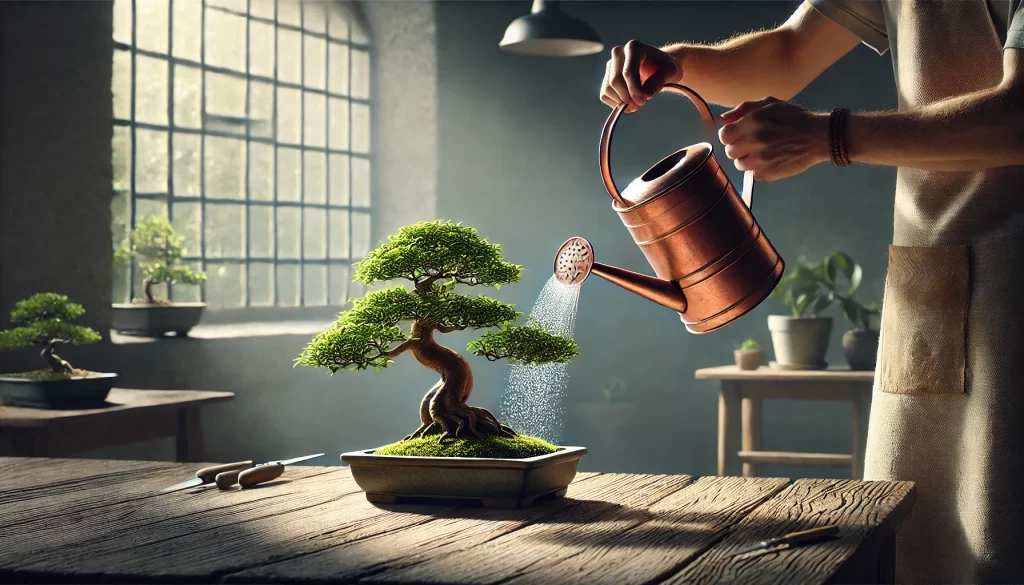
Learning how to water a bonsai correctly is one of the most important steps to ensure its health and longevity. While it might seem like a simple task, improper watering is the leading cause of bonsai stress and decline—especially among beginners. Whether you tend to overwater out of love or forget to water altogether, this guide will help you master the art of watering your bonsai the right way.
Why Watering Matters in Bonsai Care
Bonsai trees are planted in shallow containers, which limits the amount of soil and water they can retain. This means their roots are more vulnerable to drying out or drowning. Proper watering keeps the tree hydrated, supports nutrient absorption, and helps maintain root health.
Watering is not just about pouring water into a pot—it’s about understanding the tree’s specific needs based on species, climate, and soil composition.
The Golden Rule of Bonsai Watering
There is no fixed schedule for watering bonsai. Instead, follow this principle:
“Water when the soil is slightly dry—but never completely dry.”
This means you need to observe your tree every day. Use your finger or a moisture meter to check the top inch of soil. If it feels slightly dry, it’s time to water. If it’s still damp, wait a bit longer.
Common Watering Mistakes (and How to Avoid Them)
Let’s go through the most frequent errors bonsai owners make and how to prevent them:
❌ Overwatering
- Symptoms: Yellowing leaves, moldy soil, soft roots.
- Solution: Make sure your pot has proper drainage holes and never water if the soil is still moist.
❌ Underwatering
- Symptoms: Dry, brittle leaves, weak growth, soil pulling away from the sides.
- Solution: Establish a daily routine of checking soil moisture and water as needed.
❌ Watering on a schedule
- Why it fails: Your bonsai’s needs change depending on the season, temperature, and humidity. Avoid automatic routines and focus on daily observation.
How to Water a Bonsai the Right Way
Here’s a step-by-step method to ensure your tree gets the hydration it needs:
🌱 1. Check the Soil
Use your finger or a moisture probe to assess soil dryness before watering.
🚿 2. Water Thoroughly
When it’s time to water, do so generously. The water should run out of the drainage holes at the bottom. This ensures the entire root ball is moistened.
🕓 3. Wait for Drainage
Avoid letting water accumulate in trays. Bonsai don’t like “wet feet.” Always empty excess water.
🔁 4. Repeat When Necessary
In hot weather, you may need to water once or even twice a day. In winter, watering may drop to every few days or once a week, depending on the environment.
Watering Techniques: Which One Is Best?
There are a few different ways to water a bonsai. Each has its pros and cons:
🫧 Top Watering with a Can
- Ideal for: Everyday use
- Tip: Use a fine-nozzle watering can to avoid disturbing the soil.
🪣 Submersion Method
- Ideal for: Trees that have dried out
- Tip: Submerge the entire pot in water until bubbles stop rising, then remove and drain.
💦 Spray Mist
- Ideal for: Humidity-loving species or during dry indoor conditions
- Tip: Do not rely on misting as the primary watering method—it’s just supplemental.
How Climate Affects Watering Needs
Your bonsai will need different amounts of water depending on the time of year and where you live.
🌞 Summer: High heat increases evaporation—monitor soil daily.
❄️ Winter: Trees need less water but still shouldn’t dry out.
💨 Windy Days: Water can evaporate quickly, even in cooler weather.
🏡 Indoor Bonsai: Tend to dry out slower than outdoor trees—still, watch closely.
Signs Your Bonsai is Being Watered Correctly
Wondering if you’re on the right track? Look for these positive signs:
✅ Healthy green leaves
✅ Steady, compact growth
✅ No yellowing or leaf drop
✅ Firm, white roots during repotting
✅ Soil remains aerated, not compacted or muddy
Using the Right Tools for the Job
To make watering easier and more precise, consider these tools:
- 🌿 Moisture Meter: Gives you a quick reading of soil moisture levels.
- 🪣 Watering Can with Fine Nozzle: Distributes water gently and evenly.
- 🌬️ Humidity Tray: Adds moisture to the air for indoor bonsai species.
- ⏰ Timer or Alarm: Not for watering, but to remind you to check your bonsai daily.
Watering Different Bonsai Species
Every species has unique needs. Here’s a quick reference:
| Species | Watering Needs | Notes |
|---|---|---|
| Ficus | Moderate | Tolerant of inconsistent watering |
| Juniper | Light | Avoid overwatering; loves airflow |
| Azalea | High | Needs more water when flowering |
| Jade | Low | Let soil dry slightly between watering |
Build a Bond Through Watering
Watering your bonsai is more than maintenance—it’s a ritual. It’s a moment of connection between you and your tree. Observing subtle changes in leaves, bark, or growth gives you insight into its health and vitality. That bond, cultivated with each careful drop of water, is what makes bonsai truly special.
Final Thoughts on How to Water a Bonsai
Knowing how to water a bonsai correctly is a skill that develops over time. The more you observe your tree and learn its rhythms, the more intuitive your care will become. Remember, there’s no universal watering rule—only careful attention and consistency. With practice, your bonsai will reward you with beauty, resilience, and years of peaceful companionship.

Critical Observator offers expert tips and guides to make indoor plant care easy, enjoyable, and accessible.